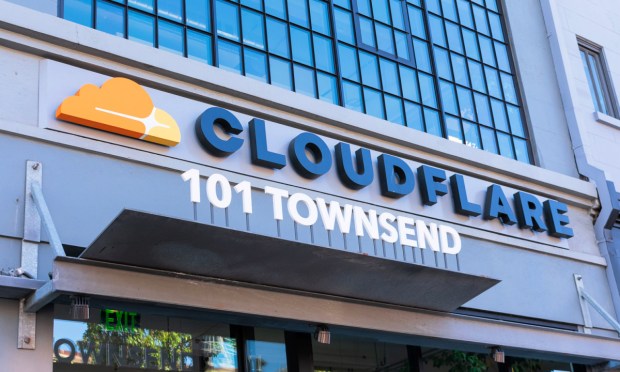
Cloudflare Wallets and cloudlfare.pay are designed to provide AI agents deployed on Cloudflare a “stable identity,” while letting them safely make online purchases within the parameters set by their creators, according to a Tuesday (Aug. 4) news release.
“Now, for the first time, buyers and sellers will have the foundational building blocks they need to participate in agentic commerce with confidence, knowing who they’re dealing with and transacting with, securely at every step,” the release said.
While AI agents are becoming a routine part of doing business online, companies have no way of knowing whether an agent visiting their site is a real customer’s assistant or a fraudster, according to the release.
We’d love to be your preferred source for news.
Please add us to your preferred sources list so our news, data and interviews show up in your feed. Thanks!
Older tools for spotting bots were designed for search crawlers, not agents transacting on behalf of real people and companies, meaning that businesses are forced to either lock everything down or take their chances, the release said.
“The internet is shifting from human-driven browsing to agent-driven commerce, and the infrastructure needs to keep up,” Cloudflare Co-Founder and CEO Matthew Prince said in the release. “When an agent shows up at your door, you need to know who sent it. Cloudflare can give agents a face—a link to the human or organization that owns them—so that trust, accountability and real commerce can follow. It’s the identity and payment infrastructure the agentic web needs to function.”
The gap between what AI agents can do and what they are allowed to do is robbing merchants of business, PYMNTS reported in May.
“The infrastructure to close it is being assembled in pieces, by competing players, with no agreed finish line in sight,” the report said. “The stakes go beyond individual transactions. Agentic commerce demands approval precision and network-level trust signals that existing infrastructure was not built to deliver. Tokenization, behavioral context and real-time identity signals are becoming the baseline for any system that wants to function at machine speed.”
Meanwhile, PYMNTS Intelligence found that although the agentic commerce market is projected to reach $1.7 trillion by 2030, close to half of consumers still point to fraud and identity concerns.
“Despite willingness to let AI complete purchases on their behalf, most consumers still harbor concerns about agentic AI controlling commerce, citing fraud from rogue agents, lack of data transparency and difficulty reversing unwanted purchases,” PYMNTS reported. “Just 5% of consumers worldwide reported having no concerns about agentic commerce at all.”
For all PYMNTS AI coverage, subscribe to the daily AI Newsletter.


 Add as Preferred Source