Muse Wonder was made available Monday to developers and builders through the Meta Model API and Muse Code, while Muse Wonder Full was made available Monday to Muse Code subscribers, according to the release.
In addition, Muse Wonder will soon power more of Meta’s AI agent, Muse, per the release.
We’d love to be your preferred source for news.
Please add us to your preferred sources list so our news, data and interviews show up in your feed. Thanks!
The new models build on Meta’s Muse Spark and deliver state-of-the-art performance on agentic tasks, the release said. Meta introduced Muse Spark in April, describing it as the first in a series of new AI models and a step on the path to “personal superintelligence.”
“Whether the job is navigating an insurance claim, understanding a lease or making sense of someone’s finances, a model has to interpret the information in front of it and work through the problem,” Meta said in the release, speaking of the new models. “Muse Wonder and Muse Wonder Full bring that capability to expert domains including law, finance and health, along with frontier coding performance for people building everything from a game to an app for a new business.”
Muse Wonder and Muse Wonder Full are equipped with Active Memory, which enables them to remember relevant details from past conversations, and Active Focus, which enables them to handle difficult tasks by trying other approaches, recovering from errors and asking for clarification, according to the release.
For safety, the models are trained to avoid sharing personal information without permission and to turn down requests to assist in performing harmful acts. They were trained, evaluated and released in accordance with the Meta Superintelligence Scaling Framework, the release said.
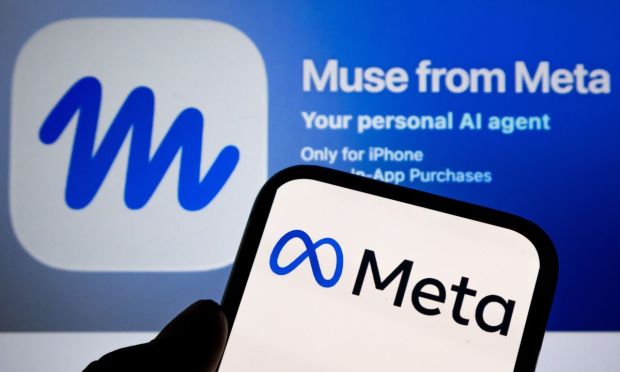
Meta launched Muse on Sept. 8, describing it as a personal AI agent that is powered by Muse Spark and designed to be simple to use and built for everyone.
Reuters reported Tuesday (Oct. 6) that a Citi analysis found that Muse is increasingly serving as the “front door to the internet” and could generate revenues of more than $27 billion by 2030. The Citi analysis also said that Meta is positioning Muse at the center of its larger AI strategy.
For all PYMNTS AI coverage, subscribe to the daily AI newsletter.


 Add as Preferred Source