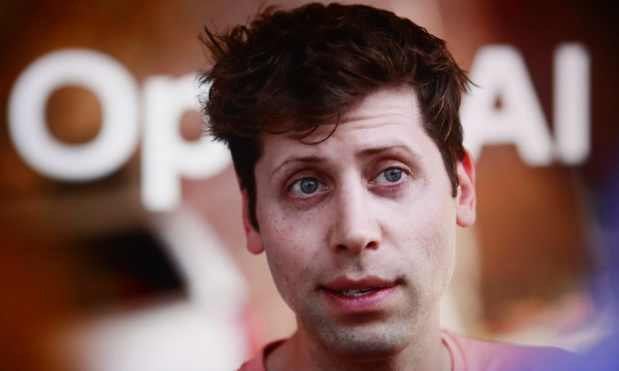
Sam Altman made that argument Sunday (Oct. 4) in an interview with Politico’s Decoded newsletter as he outlined the philosophical differences between his company and the worldview held by rival AI startup Anthropic.
“I think there’s a lot of daylight,” Altman said. When asked for specifics, he added that “we believe that the world should accept some bad things happening for the benefits of this technology and people having the agency.”
As the report notes, Anthropic has long been seen as the staunchest advocate for AI regulations within the industry.
That’s a position that until recently clashed with the more hands-off approach favored by OpenAI, although that has changed in recent months, with OpenAI supporting stricter rules as it deals with high-profile cybersecurity incidents involving its models.
We’d love to be your preferred source for news.
Please add us to your preferred sources list so our news, data and interviews show up in your feed. Thanks!
Altman agreed with Anthropic CEO Dario Amodei’s recent call to slow the pace of development for the most advanced AI models. OpenAI has also joined Anthropic in supporting new state laws that impose tougher safety requirements.
Lobbyists for OpenAI have also backed a bipartisan House proposal that would require top artificial intelligence companies to have third-party safety evaluators embedded in-house, the report said.
Still, Altman tried to draw a line between OpenAI’s and Anthropic’s regulatory views, referencing criticism that White House tech advisers have levied at Anthropic.
“I disagree, but I understand the perspective of people who are like, ‘This technology is going to get so powerful, and it’s so dangerous, that a single lab in San Francisco should have it and make sure nothing bad happens, and kind of figure out how to dole out the benefits,’” said Altman. He called it “a completely unacceptable trade-off” that runs counter to the “lighter-touch regulatory stance” backed by OpenAI.
“I wouldn’t take a trade of saying, ‘We’ll make sure there’s no major hacks, there’s no misuse of this technology, there’s zero scams, there’s zero all the other bad things that will happen,’” Altman added. “Because I think people will do tremendously — orders of magnitude more — good stuff than bad stuff.”
According to the report, Altman also said he does not accept “the really catastrophic risks,” including the risk of “a serious loss of control to AI.”
PYMNTS wrote last month that Anthropic’s call for a development slowdown places frontier AI companies close to the center of deciding which capabilities are dangerous and how quickly competitors may advance.
“That concentration of authority can’t be treated as a side effect,” the report said. “Any safety framework should weigh operational danger and market power together, asking who selects evaluators, who pays them, and who gains when development slows.”


 Add as Preferred Source