Delivery robots are moving past a simple question. Can they use sidewalks? Cities are now asking sharper ones: how many robots, how fast, and what a company should pay to operate them.
Washington Caps New Robot Fleets at 25
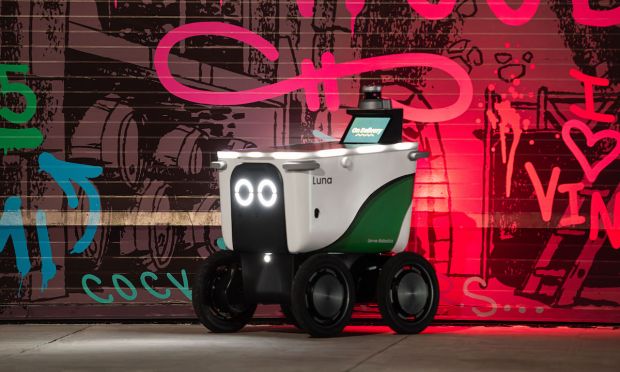
Washington, D.C.’s transportation department, the District Department of Transportation, issued new permits to Serve Robotics and Coco Robotics, according to a July 16 press release. Each company is limited to a service area of one square mile, and each fleet is capped at 25 robots for the first three months. Expansion depends on how well they follow the rules.
“Personal delivery devices offer an additional option for food delivery in the district and can be an alternative to trips made by larger vehicles,” DDOT Director Sharon Kershbaum said in the release.
Los Angeles Eyes Charging Robots Per Trip
Los Angeles took a different path years ago, setting flat permit fees for robot operators. Now the city council wants those rules rewritten, LAist reported in April. One idea on the table is to charge companies per trip instead of a flat yearly fee. Councilwoman Eunisses Hernandez, who pushed for the review, said she also wants to know if robots are earning ad revenue.
“[They’re] starting to put movie ads or show ads, and if they’re generating revenue off that, we want to know what that looks like but also be able to have a fee for them,” she said, per the report.
Serve Robotics already pays fees in Los Angeles, Chicago and West Hollywood, Serve Vice President of Public Policy Vignesh Ram said, per the report, adding that Serve is open to similar deals elsewhere.
Florida Cities Focus on Behavior, Not Just Cost
Miami Beach took a different approach. The city capped robot speeds at 8 mph, required them to yield to pedestrians at all times, and banned them from idling on a sidewalk for more than 30 minutes, according to its own ordinance, Supply Chain 24/7 reported in February.
We’d love to be your preferred source for news.
Please add us to your preferred sources list so our news, data and interviews show up in your feed. Thanks!
Operators pay a $100 annual fee per device and must carry at least $100,000 in liability insurance, the report said.
“We’ve narrow sidewalks that were designed 100 years ago plus that did not contemplate bicycles and delivery robots and people with strollers and [Americans with Disabilities Act (ADA)] mobility devices,” Commissioner Tanya Katzoff Bhatt said, per the report.
In Coral Gables, Vice Mayor Rhonda Anderson proposed capping sidewalk speeds at 7 mph, below the 8 mph Serve Robotics wanted, and gave the company six months to comply, GovTech reported in June. Anderson said robots had failed to yield to people using strollers, walkers or wheelchairs, calling it a violation of the ADA. The city is also looking to restrict delivery robots from remaining on public sidewalks, swales or rights-of-way for more than 30 minutes unless they are actively picking up or delivering food.
Tennessee Is Loosening the Rules Instead
Tennessee’s Legislature passed House Bill 1684 in February, doubling the speed limit for delivery robots from 10 mph to 20 mph and letting them operate on bike lanes, road shoulders and parking lots for the first time, not just sidewalks, WSMV reported. Gov. Bill Lee signed the bill into law, and it took effect July 1.
DoorDash, which is rolling out its own delivery robot called Dot, publicly backed the Tennessee legislation, Action News 5 reported in February.
“While Tennessee previously allowed for sidewalk-based personal delivery devices, this new legislation modernizes the state law to welcome the next generation of advanced, low-speed autonomous delivery robots like Dot, that can operate beyond sidewalks and crosswalks, all while maintaining clear and consistent statewide rules,” the company said, per the report.
State Sen. Becky Massey, one of the bill’s sponsors, said the bill “does not mandate deployment into any community” but gives merchants a new tool for short-distance deliveries, Nashville Banner reported in February.
A company entering a new city must learn a new speed limit, a new fleet cap, a new fee and a new set of rules almost every time, even though the robot itself doesn’t change.
For all PYMNTS AI coverage, subscribe to the daily AI Newsletter.


 Add as Preferred Source