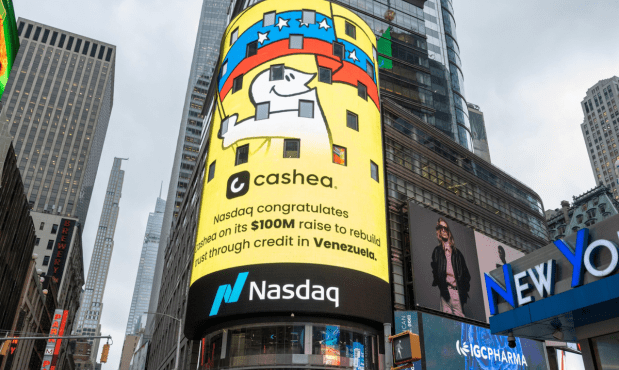
The company says the new investment will allow it to develop new financial products and improve on its technology while also letting it support initiatives like Generación Impulso, which provides 7,800 teenagers with programming and robotics training.
“This financing gives us both the ability and the responsibility to go beyond our core installment product, building new ways for Venezuelans to pay, save and buy, and new tools for the businesses that serve them,” Cashea Co-Founder and CEO Pedro Vallenilla said in the announcement. “What we are building is the financial fabric of how Venezuela buys and sells.”
We’d love to be your preferred source for news.
Please add us to your preferred sources list so our news, data and interviews show up in your feed. Thanks!
The company said the investment follows Cashea’s Series B funding round and has the support of American institutions, global investment firms and Latin American investors.
The announcement noted that this investment also follows the earthquakes that struck Venezuela, leading the company to launch “Venezuela, I Believe in You,” which saw Cashea waive fees, advance cash to merchants to boost their liquidity, and broadened its access to credit to help struggling families.
“Before investing, representatives from several of these funds traveled to Venezuela to learn firsthand about our work, speak with users and partner businesses, and understand how access to credit can expand opportunities for millions of people,” the company added. “Their decision represents a vote of confidence in Venezuelans and in the future of the country.”
The funding round comes as buy now, pay later (BNPL) products have shifted from their initial role as alternative method of payment at checkout.
“It is shaping how retailers present products, influence purchase decisions and guide shoppers through the buying process before a payment screen ever appears,” PYMNTS wrote recently, adding that this evolution is “becoming harder for merchants to ignore.”
Research by PYMNTS Intelligence research and PayPal found that 43% of consumers walk away from a purchase when BNPL is unavailable. If close to half of prospective customers are willing to abandon a transaction because financing is missing, retailers need to rethink where flexible payment options appear within the customer journey instead of viewing them as a final checkout feature, the report said.
“The findings indicate that payment flexibility is becoming part of merchandising. Consumers are evaluating affordability while comparing products, not simply after deciding to buy,” PYMNTS added. “That distinction matters because purchase intent often forms long before shoppers reach a checkout page.”


 Add as Preferred Source