By the Numbers
The PYMNTS Intelligence report, “Connected Dining: The Robot Will Take Your Order Now,” drew from a survey of a census-balanced survey of nearly 2,000 U.S. consumers to gauge their opinions about different restaurant technologies and explore what factors made them feel enthusiastic, curious or hesitant.
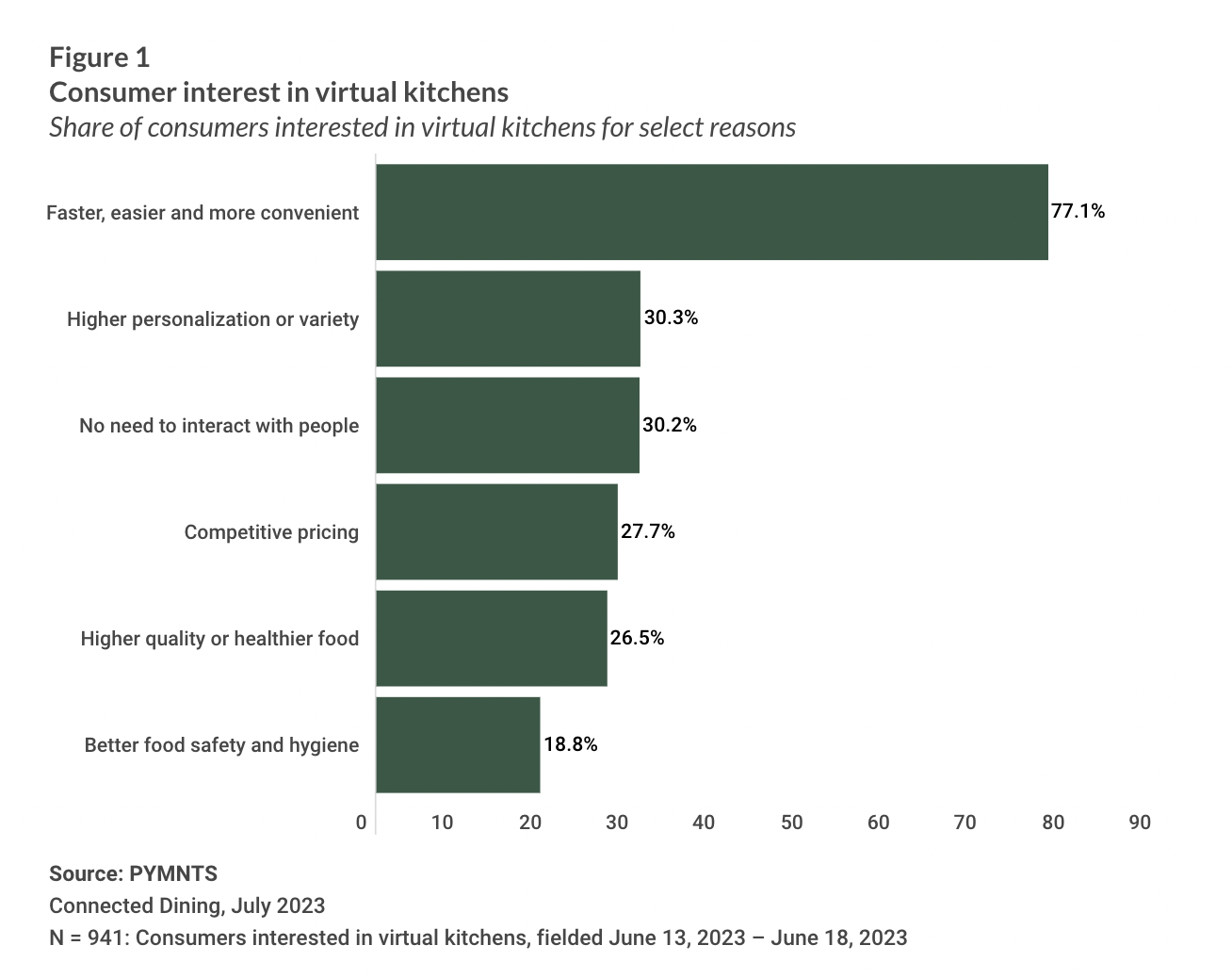
The study found that, among the roughly half (48%) of consumers who are interested in virtual kitchens, 30% of them reported that this interest comes at least in part from the fact that these digital eateries do not require any interaction with other people.
The Data in Context
Overall, the ghost kitchen space is evolving. For instance, major restaurant aggregator Uber Eats made dramatic changes to how it handles virtual brands earlier this year, instating new regulations and cutting 8,000 online storefronts from its platform.
“With the boom in virtual restaurants over the past several years, we’ve noticed a wide range of approaches to creating virtual restaurant brands,” John Mullenholz, Uber’s head of virtual restaurants and dark kitchens for the U.S. and Canada, said in a statement.
Some brands are shifting away from ghost kitchens towards more traditional channels. Take, for instance, Brinker International, the parent company of Chili’s Grill & Bar, Maggiano’s Little Italy and two virtual brands, which shared earlier this year that it is turning its focus away from its “unprofitable” virtual brands, according to CEO Kevin Hochman, toward its brick-and-mortar business.
Advertisement: Scroll to Continue
Moreover, ghost kitchen startup CloudKitchens, led by Uber co-founder and ex-CEO Travis Kalanick, has also come on hard times this year, reportedly firing staff and closing warehouses. Its buildings were said to be only at half capacity at the end of the first quarter, with the company failing to win enough restaurant contracts to fuel sales.