It’s been a week of back-to-back cyber chaos across aviation, banking and enterprise software.
And the disruptions are showing no sign of stopping, as on Tuesday (Nov. 17), Apple confirmed new outages impacting its iCloud, Apple Support, Apple Pay and App Store services. Apple’s Tuesday woes come after the Federal Aviation Administration’s (FAA) nationwide ground stop, United Airlines’ departure delays, JPMorgan Chase’s and the broader banking sector’s transaction problems, and Microsoft’s Outlook and enterprise solutions outage.
The disruptions are each separate incidents with different reported causes. Together, however, they illustrate how the failure of a single system can disrupt economic activity across customers, suppliers and counterparties. Corporate America has spent billions modernizing its technology. The more expensive question may be what happens to the systems it hasn’t replaced.
The distinction matters because the company deciding whether to replace an aging system may not be the company that ultimately bears the greatest cost when it breaks.
Read more: Microsoft’s Outlook Outage Puts Cloud Downtime on CFOs’ Ledger
Corporate America’s Technical Debt Becoming a CFO Problem
The week’s incidents are evidence of interconnected operational risk, not proof that every failure was caused by aging technology or underinvestment. But as with the FAA incident, the reports coming in about the outages show the difficult and shifting reality of enterprise modernization, where replacing one component can expose weaknesses in the infrastructure surrounding it.
That risk grows as companies connect decades-old systems to cloud platforms, automated workflows and artificial intelligence.
On Friday (Nov. 13), a routine router replacement destabilized the FAA’s telecommunications infrastructure, prompting a nationwide ground stop. The agency subsequently reported that legacy equipment became unstable as network traffic surged to approximately 1,000 connection attempts every four to five seconds. The FAA reported roughly 12,462 flight cancellations that day, although not all were directly attributable to the disruption.
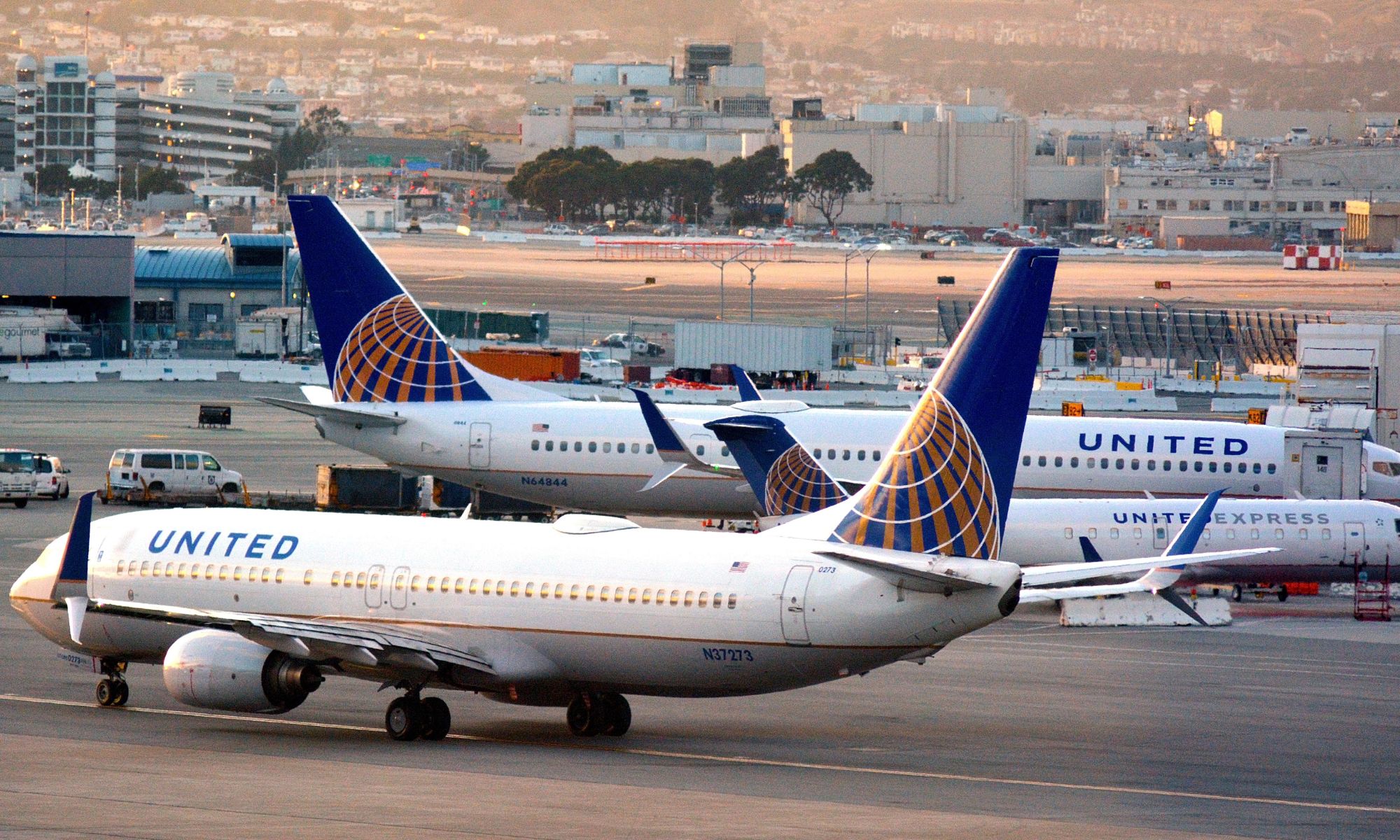
Three days later, United Airlines experienced a separate technology outage that disrupted departures for approximately 100 minutes. Pilots reported difficulties obtaining aircraft weight and performance information necessary for takeoff. Hundreds of flights were delayed that evening, although the precise number caused by the outage remained unclear.
For CFOs, the financial implications are counterintuitive. An existing system may appear inexpensive because its original investment has already been absorbed. But every additional integration can increase the cost of eventual replacement while expanding the business activities dependent on its continued operation.
Technical debt is not just the cost of old technology. It is the risk created when old and new infrastructure interact. And unlike conventional debt, technical debt does not necessarily come with a maturity date, an interest rate or a clear accounting measure of the liability accumulating.
Read also: Quantum, Crypto and AI Are Repricing the Enterprise Cybersecurity Budget
When One Company’s Outage Becomes Everyone’s Expense
On Monday (Nov. 16), JPMorganChase said a software bug affecting its internal hardware systems had delayed transactions. Customers at other financial institutions also experienced difficulties when their transactions involved Chase, even though those banks’ own systems were not necessarily malfunctioning. The Zelle network remained operational, but some transfers involving Chase customers were delayed.
The financial consequences of technical debt become more complicated when a technology failure spreads beyond the organization operating the system.
A manufacturer’s technology failure can delay supplier payments. A bank’s transaction interruption can affect business liquidity. A cloud provider’s outage can prevent customers from accessing services without those customers having any direct control over the underlying infrastructure.
Corporate America’s digital transformation has made companies more efficient by connecting more of their operations to shared systems. It has also made the financial consequences of individual failures harder to contain.
PYMNTS covered Tuesday how global cyber insurance premiums are reportedly expected to increase 6.9% to $16.6 billion this year, before accelerating to 10% growth for 2027 to $18.3 billion. The news comes days after the FBI issued a warning about ARTEX, an AI-powered hacking framework associated with intrusions that allowed hackers to reach privileged enterprise access in fewer than three hours.
The PYMNTS Intelligence report “Scale Amplification: How Revenue Amplifies Agent-Driven Identity“ showed in April that large enterprises, with their larger digital footprints, can be more susceptible to today’s new AI-powered attacks favored by adversarial fraudsters.
The issue becomes more consequential as enterprises consolidate communications, identity management, security and increasingly AI capabilities around a smaller number of technology providers. The PYMNTS Intelligence report “Vendors and Vulnerabilities: The Cyberattack Squeeze on Mid-Market Firms,” published in August 2025, found that when it comes to cyberattacks, middle market companies’ third-party vendors and other outside partners “often play the role of unwitting accomplice after themselves being compromised.”
There is an important complication: New technology can fail, too. For CFOs, the next phase of technology investment may therefore depend less on how much innovation a company can afford to deploy than on how much economic activity it cannot afford to interrupt.
For all PYMNTS digital transformation, AI and B2B coverage, subscribe to the daily digital transformation, AI and B2B newsletters.