Now they’re stepping into a more strategic role powered by the rise of embedded finance.
The technology, long billed as a tool to simplify customer payments, is reshaping how accountants forecast, manage liquidity and advise management on growth decisions.
We’d love to be your preferred source for news.
Please add us to your preferred sources list so our news, data and interviews show up in your feed. Thanks!
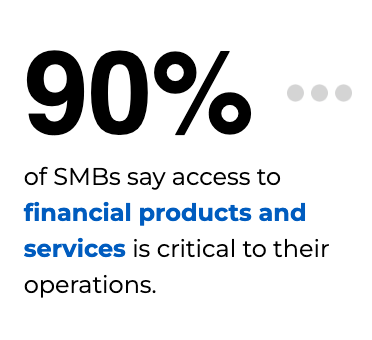
The PYMNTS Intelligence report “Platform Power: The Growing Importance of Embedded Finance to SMB Success,” a Worldpay collaboration, found that 9 in 10 SMBs view access to embedded financial products as critical to their operations.
While headlines often focus on sales boosts and consumer convenience, the overlooked story is how accounting departments are leaning on these tools to reduce friction in daily workflows and sharpen their influence over business strategy.
Key findings with direct implications for accounting teams include:
- Ninety percent of SMBs told researchers that embedded finance tools integrated into their management platforms were essential for operations. For accounting teams, the benefit goes beyond ease of reconciliation. Access to real-time payment and lending data allows staff to build forward-looking cash flow models that once took days to assemble from bank statements and invoices.
- Thirty-seven percent of small and microbusinesses were highly likely to switch to a payment provider that offered embedded lending. Among those that actually used embedded lending, that number jumped to 69%. Accountants, often tasked with sourcing and vetting financing, can now tap into these integrated credit options without leaving their existing software stack, reducing the time and error risk of manual applications.
- Seventy-two percent of microbusinesses and small firms that used embedded lending reported being highly satisfied, compared with 57% who relied on other types of lending. For accounting teams, satisfaction translates into fewer late-night reconciliations and a smoother close process at month-end. It also strengthens their ability to guide owners toward the right financing mix rather than being bogged down in troubleshooting software gaps.
Beyond these accounting-centric benefits, the report charts broader momentum for embedded finance across sectors from healthcare to logistics.
SMBs that have access to embedded software are not only able to offer financial options to their customers, but they can also obtain financing themselves. Companies that adopted embedded financing saw sales rise by 25% to 50% on average.
With 65% of businesses open to switching providers, up from 55% in 2024, the pressure is on technology vendors to keep innovating.
The findings suggest that accountants are no longer the last to know about new financial tools; they’re often the first to deploy them. In a competitive economy where every percentage point of margin counts, embedded finance isn’t just greasing the wheels of commerce. It’s giving the people who tally the numbers the power to shape the story those numbers tell.



 Add as Preferred Source