As The Wall Street Journal (WSJ) reported Saturday (Feb. 7), that country now has more than 140 companies in the field, producing humanoid robots at scale and moving them into real-life scenarios in factories, hotels and offices.
The report said it’s part of an effort by the Chinese government, which aims to lead the “embodied AI” — combining artificial intelligence (AI) and physical systems — space in the next five years. Since late 2024, cities like Beijing have set up investment funds of more than $26 billion to finance the industry, WSJ added, citing data from Morgan Stanley.
Government agencies and state-owned businesses are also getting involved, with robots at work at museums and events, and in some cases, directing traffic, the report added.
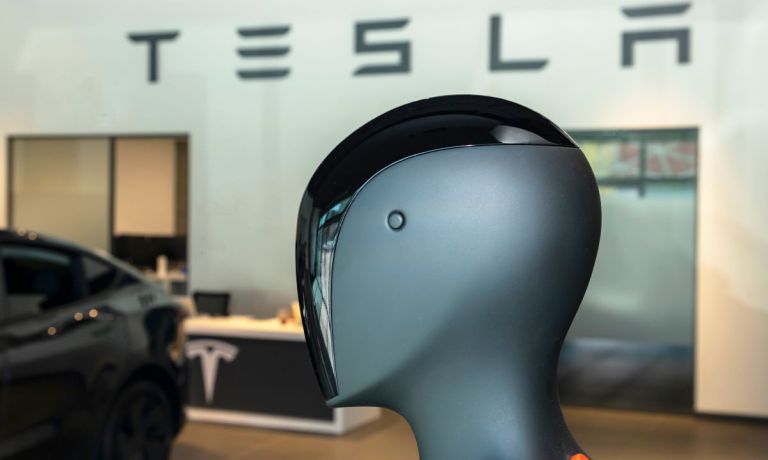
The WSJ noted that Elon Musk, whose company Tesla has been shifting its focus to humanoid robotics, recognizes the potential of the Chinese market.
“China is an ass-kicker, next level,” Musk said in January. “To the best of our knowledge, we don’t see any significant [humanoid robot] competitors outside of China.”
However, the report added that the industry is still in its early stages, may take years to take flight, and still faces skeptics who argue humanoid robots are a bubble.
And as PYMNTS wrote recently, there is also emerging evidence to indicate that the real-world productivity of humanoid robots is still far below expectations.
Industry research shows that robot workers are operating at less than half the efficiency of their human counterparts workers in early deployments, according to metrics such as task completion speed, reliability and sustained output. Although robots can carry out individual actions competently, they still have trouble matching humans on tasks requiring fluid sequences, adaptation or uninterrupted execution in dynamic settings.
“This productivity shortfall is beginning to reshape expectations. Companies experimenting with humanoid robots are increasingly treating them as long-term bets rather than short-term efficiency tools,” PYMNTS wrote.
“Even well-funded pilots often require extensive human supervision, frequent resets and environmental adjustments that dilute the promised gains. Instead of accelerating output, many deployments introduce new layers of complexity that offset automation benefits.”
The main bottleneck is not cognitive intelligence but physical execution, the report added. While advances in large language models (LLMs) have bolstered robots’ ability to interpret instructions and plan actions, translating those plans into reliable movement is still a challenge.
“Real-world environments are noisy, irregular and full of edge cases that machines handle poorly,” PYMNTS added.
For all PYMNTS AI coverage, subscribe to the daily AI Newsletter.