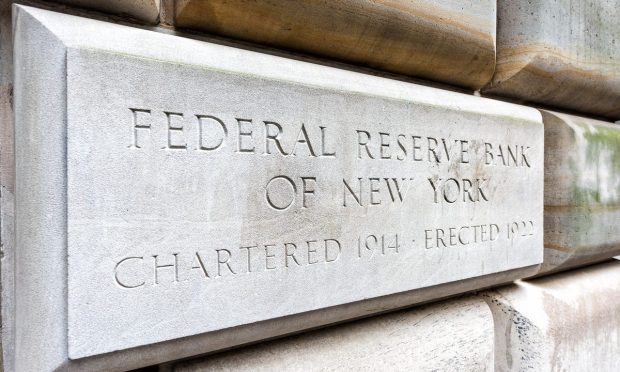
That was the question at the center of a new paper published by economists at the Federal Reserve Bank of New York, titled “Stablecoin Disintermediation.” The paper’s authors, Michael Junho Lee and Donny Tou, found that stablecoins do more than compete with bank deposits. They alter the liquidity demands placed on the banks that serve them. In doing so, they encourage a more reserve-heavy and potentially less loan-intensive banking model.
The paper focused on a specific period, the post-Silicon Valley Bank collapse. In March 2023, several banks that had served the cryptocurrency industry failed alongside SVB. Stablecoin issuers had to form new partnerships quickly, and this shift created a natural experiment. The researchers compared banks that became major partners after this period with similar banks that did not. Then, they studied changes in payment activity, reserve volatility and balance sheet composition.
Stablecoins depend on banks. That dependency changes the liquidity profile of the banks that support them, with institutions typically responding to any stablecoin growth by holding more reserves and reducing the relative weight of their lending activities, the paper found. These adjustments are rational from a risk management perspective. But they also have the knock-on effect of reshaping the way deposits are transformed into credit.
The paper estimated a drop of about 14 percentage points in the studied banks’ loan-to-asset ratio relative to peers. The authors described this outcome as a form of disintermediation. In the traditional sense, disintermediation occurs when deposits move out of banks and into other instruments. In this case, the effect runs through liquidity management. Even banks that gain stablecoin deposits operate more narrowly. They hold more reserves and allocate a smaller share of assets to loans.
For executives and policymakers, the study provides a reminder. Digital innovation in payments does not occur outside the financial system. It flows through it. As stablecoins expand, the impact will not be limited to crypto markets. It will show up in reserve balances, payment flows and bank balance sheets. Understanding these linkages will be essential as digital dollars become more integrated into the mainstream economy.
Read also: Behind the Stablecoin Buzz, Old-School Infrastructure Still Runs the Show
Stablecoins and the Rewiring of Bank Liquidity
Stablecoins, at least as regulated by the GENIUS Act in the United States, are digital tokens that aim to hold a steady value against the U.S. dollar. They allow users to move dollar claims across blockchains in a programmable, machine-speed manner. To keep their value stable, issuers promise that each token can be redeemed for one dollar. That promise depends on access to the traditional banking system. When a customer wants to redeem stablecoins, the issuer must send dollars through the banking system. When a customer buys new stablecoins, the issuer receives dollars into a bank account.
Stablecoin activity is not smooth. Issuance and redemption volumes fluctuate from day to day and even within the same day. The paper’s authors found that a rise in stablecoin primary market activity was associated with an increase in the intraday volatility of partner banks’ reserve balances.
This pattern supports the paper’s main idea. Stablecoins transmit liquidity shocks to partner banks. When stablecoin users redeem tokens in large amounts, the issuer must send dollars out through its bank. That creates payment outflows. When users purchase tokens, dollars flow in. These flows can be large and concentrated. They affect reserve balances throughout the day.
The authors were careful about scope. The treated banks in their sample were mid-sized institutions for which stablecoin deposits are meaningful relative to their balance sheets. The stablecoin market remains small compared with the entire U.S. banking system. The paper offered a window into how effects might scale as the market grows.
We’d love to be your preferred source for news.
Please add us to your preferred sources list so our news, data and interviews show up in your feed. Thanks!
Since the start of 2026, more systemically relevant global banks, like Morgan Stanley, have already entered the digital asset space.
One of the more forward-looking takeaways of the paper was about payments. After forming partnerships with a large stablecoin issuer, the treated banks experienced a rise in interbank payment activity. Daily payment values increased by about 67% relative to their own pre-period levels and relative to control banks.
The cumulative effect is structural, not episodic, and reflects the design of stablecoins as instruments intended for rapid, at-par redemption.
See also: Why Banks Want to Issue Stablecoins
Stablecoins Are No Longer a Crypto Sideshow
The paper came after a separate report from the New York Federal Reserve, “Stablecoins vs. Tokenized Deposits: The Narrow Banking Debate Revisited,” found that, in contrast to stablecoins, tokenized bank-issued deposits can fund loans and investments, tying money creation to credit expansion.
That analysis reframes stablecoins and tokenized deposits not as competing payment tools but as instruments with fundamentally different balance sheet consequences. The choice between them affects liquidity strategy, counterparty exposure, and ultimately the cost and availability of credit across the economy.
At the same time, the crypto industry still hasn’t found a solution to prevent criminals from exploiting the technology, and until it does, expanding access without enhanced guardrails mostly expands harm.
That’s what Andrew Balthazor, associate and co-lead of the crypto asset disputes team at Holland and Knight LLP, told PYMNTS last month during a discussion for the latest “From the Block” podcast with PYMNTS CEO Karen Webster and Citi Global Head of Digital Assets for Treasury and Trade Solutions Ryan Rugg.
For all PYMNTS digital transformation coverage, subscribe to the daily Digital Transformation Newsletter.


 Add as Preferred Source