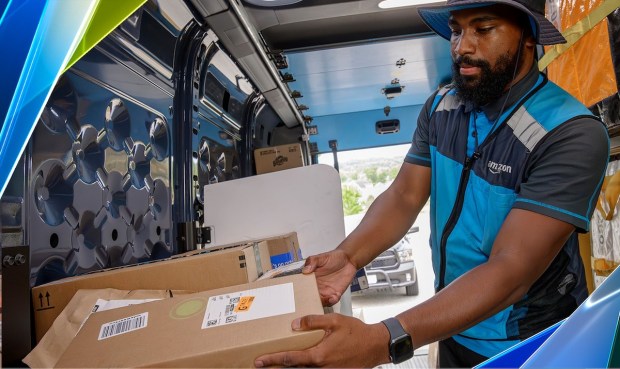
This will help DSP’s boost delivery associate (DA) pay to a national average of nearly $24 per hour, Amazon said in its announcement Monday (Sept. 21).
“Amazon’s safety investments and DSP leadership are delivering results, with serious crashes down more than 23%,” the announcement said. “AI-powered tools like Wellspring and Amazon’s Smart Delivery Glasses are making deliveries faster and more accurate. Amazon is also committing $70 million over the next five years towards community impact initiatives led by DSP owners.”
We’d love to be your preferred source for news.
Please add us to your preferred sources list so our news, data and interviews show up in your feed. Thanks!
The company devoted a separate announcement just to the use of delivery-focused smart glasses, wearable technology designed to make deliveries even safer.
“These glasses help DAs scan packages, see heads-up walking directions, capture proof of delivery, and receive pet alerts—all without the use of their phone,” Amazon said. “The technology creates a hands-free experience, reducing the need to look between the phone, the package, and the surrounding area. Use of the glasses is voluntary for both DSP owners and their teams of DAs.”
Other new safety initiatives include new surround-view cameras that identify vehicles, cyclists and pedestrians from all directions and inform DAs. The technology will be installed in 50% of Rivian electric delivery vehicles across Amazon’s network by the year’s end.
Amazon is also adding new dynamic hazard alerts to the Amazon Delivery App, to give delivery workers real-time notifications about accidents, road closures and construction on their route, while also automatically adjusting route navigation during inclement weather or when hazards are detected, with no action needed from workers.
These upgrades are happening as Amazon is expanding its overall delivery network as it competes with chief rival Walmart.
As covered here last week, Amazon’s Project Mercury plan would expand the company’s same-day delivery hubs from their current 85 to more than 1,000 by 2031. Such a move could increase Amazon’s same-day footprint by more than tenfold and position fast-delivery capacity within 10 miles of 80% of the company’s Prime members in the U.S.
“The headline is speed. The more consequential story is proximity,” the report said. “Amazon is effectively trying to manufacture through logistics infrastructure something Walmart already possesses through real estate: inventory sitting close enough to millions of households that everyday purchases can arrive within hours rather than days.”


 Add as Preferred Source