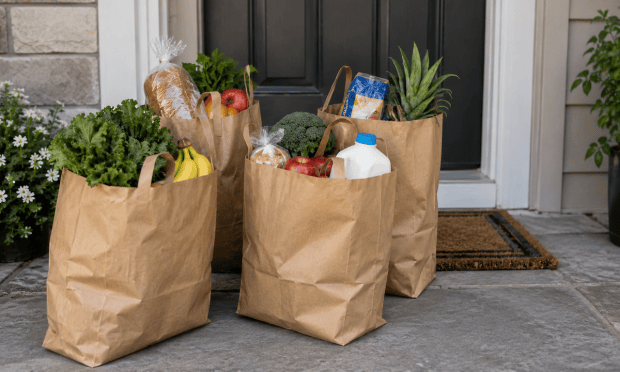
The buy now, pay later (BNPL) wallet is crowded, and grocery purchases show just how much the leading providers already overlap.
Between 87% and 96% of users associated with Affirm, Afterpay, Klarna and PayPal Pay Later report using BNPL for groceries, according to PYMNTS Intelligence’s “Beyond Pay in 4: How BNPL Providers Compete for First Choice.” Restaurant use is similarly broad, ranging from 81% to 88%.
The tighter numbers in those categories contrast with much wider gaps elsewhere. Food delivery and home services, in particular, separate the customer bases and show where providers have room to capture a larger portion of spending from consumers who already use BNPL.
Provider use overlaps. Affirm reaches 50% of BNPL users, Afterpay 48%, Klarna 47% and PayPal Pay Later 41%, and the report says most consumers use two or more providers. A consumer’s Pay Later wallet, in other words, can contain several options for different purchases.
Food delivery provides one of the clearest examples.
Eighty-one percent of Klarna users and 80% of PayPal Pay Later users report BNPL use for food delivery. The figure falls to 71% among Affirm users and 66% among Afterpay users, creating a 15-percentage-point difference between the highest and lowest shares.
Home services are even more divided. Sixty percent of PayPal Pay Later users report BNPL use in the category, compared with 49% of Affirm users, 42% of Klarna users and 39% of Afterpay users. The 21-point spread is substantially larger than the nine-point range for grocery use.
We’d love to be your preferred source for news.
Please add us to your preferred sources list so our news, data and interviews show up in your feed. Thanks!
The data offer a view of where each customer base is already using installment payments and where penetration remains lower.
For providers, those gaps can translate into merchant and category opportunities. Grocery use approaching 90% or more across all four customer bases leaves less differentiation in whether consumers use BNPL in the category. Food delivery and home services leave considerably more room for providers with lower penetration to deepen usage among customers they already have.
Competing for the Next Purchase
The report also finds differences in the customers each provider reaches and how frequently they repay.
Affirm reaches 58% of subprime BNPL users, for example, while Klarna reaches 55% of users earning at least $150,000. Among consumers who make monthly BNPL payments, Affirm reaches 57%, followed by Afterpay at 51%, Klarna at 43% and PayPal Pay Later at 38%.
Product limits differ as well. Pay in 4 ceilings range from $249.99 at Affirm to $5,000 at Afterpay, while the providers also offer different longer-term financing options. Those differences give consumers reasons to keep multiple BNPL relationships available depending on the merchant, purchase amount and repayment period.
The read across is one where providers already share much of the same grocery customer base, but they don’t have the same position across every part of consumers’ spending.
Winning more of an existing user’s BNPL purchases may depend on closing those category gaps, giving a consumer who already has several Pay Later choices a reason to select the same one for the next purchase.


 Add as Preferred Source