It examines a problem that employers, workforce platforms, banks, FinTechs and payments providers can no longer treat as a household-budget issue alone. When the cost of getting to work rises, some workers simply can’t afford to show up.
Based on a June 2026 survey of 2,465 U.S. adults, including 2,020 employed respondents, the report finds that transportation costs are now shaping labor availability, job reliability and worker financial health. The pressure is especially acute for Labor Economy workers, defined as those earning no more than $25 an hour and typically less than $50,000 a year.
Here’s the counterintuitive part. Commute costs take up a similar share of monthly income for lower- and higher-earning workers. So why do lower earners absorb the hit so differently? It isn’t what they spend, it’s what they can’t. Nearly half of Labor Economy workers have one month or less of savings, making higher gas prices not just an inconvenience, but a deciding factor in whether a shift is worth taking.
From there, the stress ripples outward.
Workers affected by rising fuel costs are changing schedules, seeking closer jobs, delaying vehicle maintenance and cutting basic spending. Some are missing shifts, losing hours, turning down work or facing discipline because the cost and reliability of getting to work have deteriorated.
For employers and workforce platforms, that means a fuel-price spike can become a staffing problem overnight. For financial services providers, it opens a clear window to help workers manage cash flow before a commute turns into a lost paycheck.
We’d love to be your preferred source for news.
Please add us to your preferred sources list so our news, data and interviews show up in your feed. Thanks!
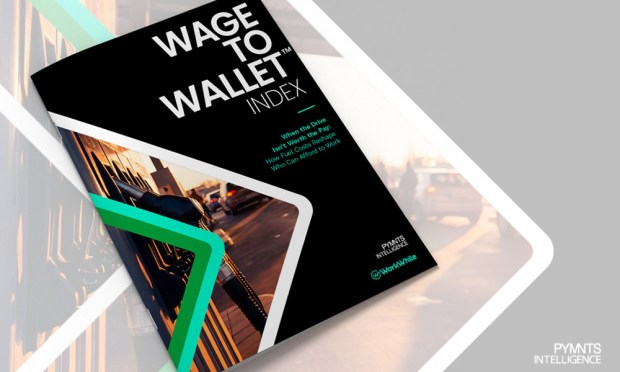
In “When the Drive Isn’t Worth the Pay: How Fuel Costs Reshape Who Can Afford to Work,” learn how:
- Rising transportation costs are turning the commute into a new form of work friction. Rising fuel costs change not just what workers spend, but whether they can participate in the labor market at all.
- Thin savings buffers amplify the impact of higher gas prices. Workers with similar commute burdens can face very different outcomes depending on how much cash they have between paychecks.
- Financial products and workforce tools can prevent transportation stress from becoming lost income. The report highlights instant pay, fuel-related rewards, commute-aware scheduling, cash flow alerts and emergency savings support.
About the Index
The Wage to Wallet Index is a monthly study produced by PYMNTS Intelligence in collaboration with WorkWhile. This report is based on a June 2026 survey of 2,028 U.S. adults. Analysis of commuting, fuel impact and work disruptions is based on 1,019 employed respondents. Findings on fuel-related behavior and disruption are based on 872 Labor Economy workers affected by rising work-related costs. Gas prices are derived from the U.S. Energy Information Administration national weekly averages. Labor Economy workers are hourly, gig, seasonal or shift-based workers earning no more than $25 an hour and typically less than $50,000 a year; non-Labor Economy workers generally earn more.


 Add as Preferred Source