There are more than $300 billion worth of stablecoins out in the world. Most of those tokens are used as trading and liquidity architecture for global crypto markets, which themselves boast a market capitalization of around $4 trillion.
But while all stablecoins are designed to do one simple thing, hold their “peg” to an immutable value, the mechanisms and reserves behind them can vary dramatically; as can their use cases within corporate and enterprise settings.
Underscoring the fact that not all stablecoins are be created equally, Ethena USDe, the third-largest dollar-pegged stablecoin with some $12.6 billion in circulation, lost its peg this Saturday (Oct. 11), trading as low as $0.65.
The dip stressed a simple truth for finance teams mapping exposure across the issuer market: Certain stablecoins out there can behave less like digital cash and more like leveraged instruments.
Given that one of the more encouraging trendlines market observers frequently cite is the growing institutional embrace of blockchain products for high-value, high-frequency, and high-importance financial operations, not knowing the dynamics behind the stablecoin issuer landscape could present financial and digital asset leaders with quite a conundrum when expectations of “pegged” safety collide with real-world stress.
Read also: PYMNTS Flags Four Stablecoins CFOs Are Testing for Liquidity at Speed
Booming but Brittle
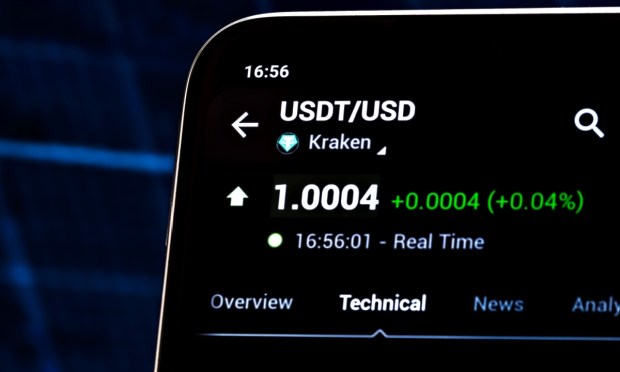
With stablecoins now integrating into FinTech and payments rails, the stakes for staying “stable” are growing fast. The stablecoin market today is dominated by the USDT token, issued by Tether, which holds a hair below three-fifths of the market (59%) at $180 billion in market cap; and the USDC token, issued by Circle, which counts less than half of Tether’s market share and slightly over $75 billion in market cap.
Any stablecoin whose peg can meaningfully deviate under duress does not offer the risk profile of cash or bank deposits and can be treated accordingly in risk mapping.
At one end of the spectrum sit fiat-backed issuers such as Circle’s USDC and Tether’s USDT, which say their tokens are backed by cash and short-term Treasurys held by regulated custodians. Those reserves have made USDC and USDT function much like digital money-market funds, with predictable liquidity and redemption windows.
But even among fiat-backed players, disclosure practices vary widely and have led to recurring questions about asset composition and oversight.
We’d love to be your preferred source for news.
Please add us to your preferred sources list so our news, data and interviews show up in your feed. Thanks!
Read more: Stablecoins ‘Perform Poorly’ as Money and Could Face Uphill Payments Battle
Ethena’s USDe token, for example, represents a unique backing model. Rather than relying solely on reserves, its synthetic structure relies on hedging via perpetual futures and collateral in liquid staking tokens (e.g. ETH derivatives) to replicate a dollar-backed value.
That structure allows the token to generate yield from funding rate differentials but ties its stability to the health of derivatives markets and counterparty performance. When funding rates spike or liquidity dries up, the mechanism can wobble, as it did this weekend.
Even in regulated issuers, stablecoin holders face counterparty and custody risk. Who holds the reserves? Are they in bankruptcy-remote vehicles? Are they collateralized by TFAs or external custodians? Are they exposed to banking or institutional default risk? In synthetic designs, the counterparties to derivatives and hedges introduce additional layers of risk.
For finance teams, the ability to draw boundaries between stablecoins that operate like money and those that behave more like investment products can be a first-order concern.
Roadmap for Integrating Stablecoins
The ultimate lesson for corporate teams weighing digital assets is a pragmatic one. Stability isn’t a label; it’s a function of design, disclosure and market depth.
Even if a stablecoin is mechanically sound, it must be sufficiently liquid and widespread to support large transfers and settlement needs. The deep order books and broad network connectivity of USDC and USDT provide a scale advantage: they can move tens or hundreds of millions across exchanges or chains without large slippage.
“Moving $10 [million] to $30 million across borders into exotic corridors typically takes three to five business days,” Stable Sea CEO Tanner Taddeo told PYMNTS in a July interview. “With stablecoins, it can settle in four to eight hours.”
“Every business has a stablecoin use case,” Taddeo added. “Whether it’s internal payroll, contractor payments or capital markets access. Form a tactical SWAT team to identify the right pilot.”


 Add as Preferred Source