Fourteen percent of consumers, representing approximately 36 million shoppers, buy items through social media.
However, as illustrated in “Tracking the Digital Payments Takeover: Monetizing Social Media,” a PYMNTS and Amazon Web Services (AWS) collaboration, the ones that do rate their experience as highly satisfactory.
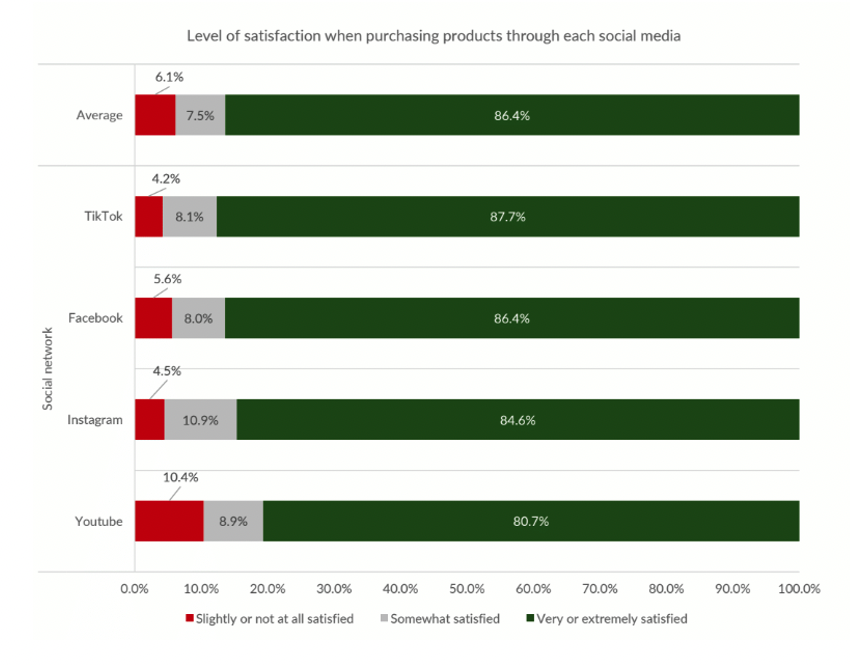 An overall 87% of consumers said they are very or extremely satisfied when buying products through social media, a far cry from the 60% of consumers who cited frustrations with the experience last September. With 88% satisfaction, TikTok leads when it comes to happy customers, just above Facebook at 86% and Instagram at 85%. Trailing the competition is YouTube, as a relatively smaller 80% of surveyed consumers cited being very or extremely satisfied through purchasing across the platform.
With these high odds of satisfaction, it may be no wonder that some brands and businesses are persisting in exploring social media as selling platforms, despite the smaller share of consumers who have adopted this behavior. Grocery giant Albertsons has been testing shoppable Facebook and Instagram ads for more granular target marketing, while TikTok is readying its first online retail store through the company’s U.S. app.
In an interview with PYMNTS Karen Webster published in June, Marie-Elise Droga, head of global FinTech partnerships at Visa, detailed the rise of social media commerce, along with its current and future opportunities.
“COVID came and put [social commerce] on steroids,” Droga said. “There are north of 300 million individual creators out there, and they are ever global in nature. As financial institutions wake up to the opportunity, they need to treat creators as [small- to medium-sized businesses (SMBs)] through the lens of the financial services they develop.”
“It’s a mountain of an opportunity to play a role in getting that ecosystem of merchants, of financial institutions, of FinTech together to really help the creators accelerate growth and to build a safe, durable, scalable business globally,” she added.