By the Numbers
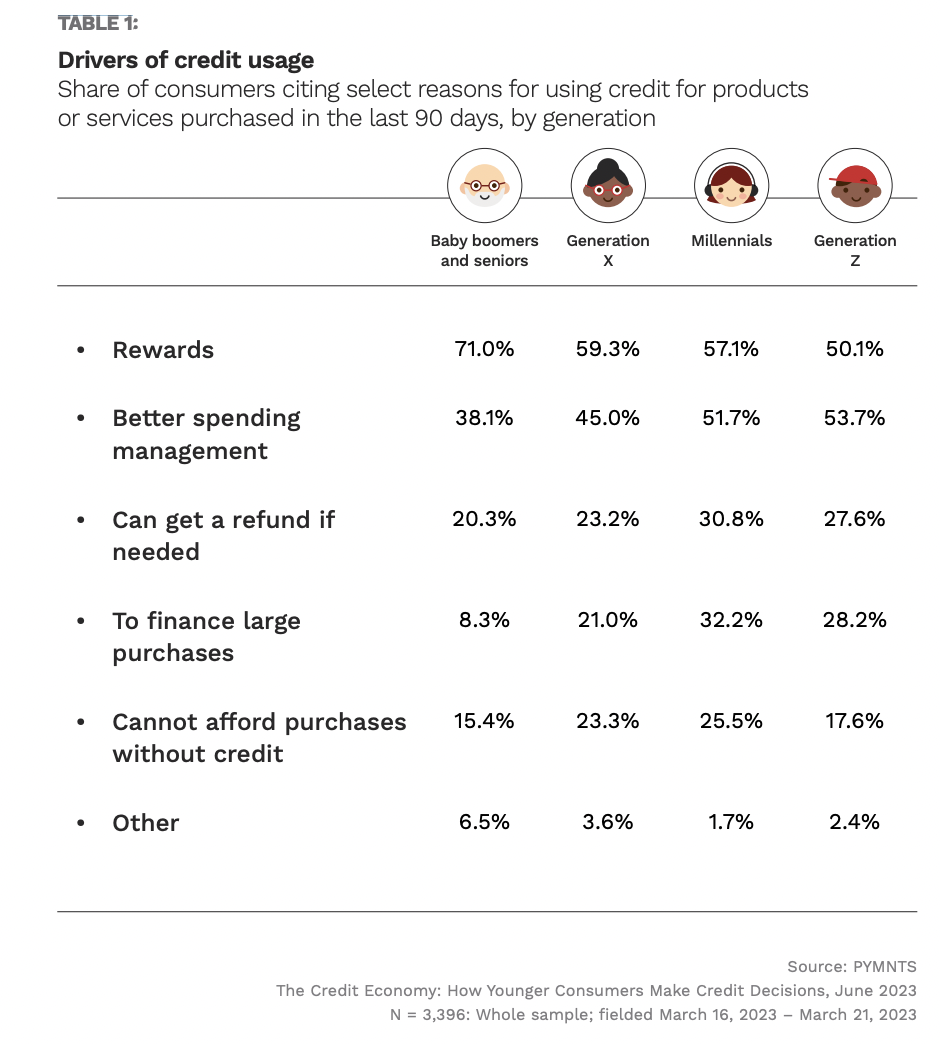
The study “The Credit Economy: How Younger Consumers Make Credit Decisions,” a PYMNTS and i2c collaboration, which drew from a census-balanced survey of nearly 3,400 U.S. consumers, examined what drives different generations’ interest in using credit cards and buy now, pay later (BNPL) for purchases.
The results revealed that millennials, Generation X consumers and baby boomers and seniors are most likely to cite rewards as a reason for using credit to pay for their purchases. In contrast, Generation Z consumers are most likely to cite better spending management.
The Data in Context
Indeed, a solid share of consumers are being somewhat conservative in their spending.
“I do think spend is fine but not boomy, broadly speaking,” JPMorgan Chase CFO Jeremy Barnum said of consumer cardholders on the company’s most recent earnings call earlier this month.
Still, consumers are making purchases. The Personal Consumption Expenditures price index from the Bureau of Economic Analysis showed that consumer spending in February, the most recent month reported, was up 0.8% month over month, amounting to a $145.5 billion increase.
Plus, many shoppers are making fewer cutbacks, tired of years of budgeting behaviors. On a call with analysts Friday (April 19) discussing Procter & Gamble’s third-quarter fiscal 2024 financial results, CFO Andre Schulten said consumers are sticking with national brands, no longer sacrificing them for lower-priced store-brand options.
“Private label shares, value shares, are actually very stable — 16.4% [in the] past 1 month and 16.4% [in the] past 12 months,” Schulten said. “So, consumers are not trading down within the U.S. towards private label.”