“We see earth-shattering change in customer experience with same-day and fast delivery,” Omaha Steaks President and CEO Nate Rempe told PYMNTS. “We see customer satisfaction metrics that we haven’t seen before in the business.”
Consumers who once planned special meals days in advance increasingly expect dinner to arrive on demand. That shift is forcing even century-old food manufacturers like Omaha Steaks to rethink not only how they market products, but how they package, manufacture and deliver them. The result is that logistics is evolving from an operational function into a core part of the customer experience.
“We have always been, and will always be, in the experience business,” Rempe said. “It’s something that America needs, which is memories and time and the human aspect.”
While technology can compress delivery windows and improve operational efficiency, its highest value lies in strengthening the emotional promise that made the Omaha Steaks brand relevant in the first place, Rempe said.
That value is the broader significance behind Omaha Steaks’ April expansion of same-day delivery services through Roadie, a UPS company. While the partnership may appear to be another retail convenience play, Rempe described it as an operational transformation that touches manufacturing, sustainability, cold-chain science and changing consumer expectations simultaneously.
Logistics Is Becoming Brand Equity for D2C Businesses
In an era where convenience is increasingly commoditized, the companies most likely to differentiate themselves may be those that use technology not simply to deliver products faster, but to make meaningful moments easier to create. Digital transformation is often framed around apps, eCommerce and customer acquisition. But for companies whose competitive advantage begins in physical production, modernization starts earlier in the value chain.
“We are a meat company more than anything,” Rempe said. “We are a manufacturing business. We create, better than anyone else, a filet mignon. Protecting that while we’re radically transforming the business is the CEO’s job. To toe the two lines.”
Whether shipping Father’s Day gifts every few seconds during peak season, or delivering dinner within hours, the underlying proposition of Omaha Steaks must remain consistent while delivering against 21st-century expectations.
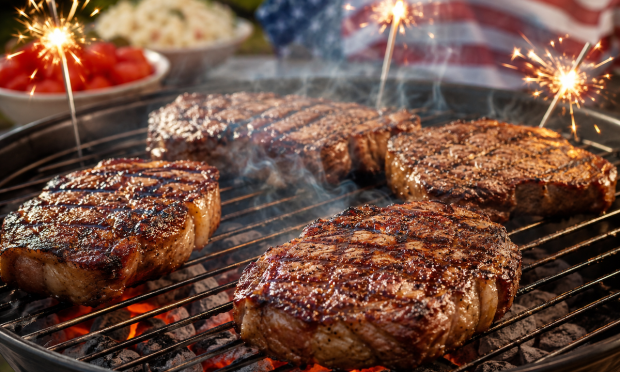
“America still loves beef,” Rempe said. “There is no replacement for that product, and they’re not willing to give up quality.”
Thanks to the same-day delivery partnership, instead of competing only with specialty food retailers or holiday gift catalogs, the company can now compete for tonight’s dinner decision, a larger and more frequent purchasing occasion, Rempe said.
Shorter transit times reduce spoilage, minimize packaging failures and improve delivery predictability. Customers know precisely when products will arrive and are available to receive them, reducing one of the largest variables in frozen food fulfillment.
“We’re connecting both sides of the bookend of the cold chain,” Rempe said. “We get it there fast. Customer knows right when it’s going to arrive… Those two things have created a revolution of improvements in customer experience.”
Rather than simply passing along higher costs, Omaha Steaks has leaned into food science. One example involves aging top sirloin for 42 days to produce tenderness approaching that of a traditional filet while preserving the richer flavor profile associated with sirloin.
“We are using food science and experience to allow America to trade down to our top sirloin, but not give up that tenderness and that beefy flavor that they desire,” Rempe said.
Sustainability Changed the Packaging. Customer Expectations Changed Everything Else.
Despite the operational transformation, Rempe didn’t describe Omaha Steaks as a logistics company or experience company. Instead, the product and the experience are inseparable, he said.
“The product is the experience,” Rempe said. “Our mission is to bring great experiences to people.”
One example comes from Omaha Steaks’ evolved packaging strategy. Traditionally, the company relied on Styrofoam coolers to ship frozen products nationwide. As consumer expectations around sustainability evolved, however, leadership sought more environmentally responsible packaging. The problem was scientific.
“There is no direct replacement for Styrofoam,” Rempe said. “As we move away from the world’s best insulator… we had to shorten the time from fulfillment to customers so we could still maintain a really high level of cold chain integrity.”
“America can now get Omaha Steaks just as fast as they can a delivery from their grocery store, on average,” Rempe added, noting that what began as a sustainability initiative quickly became a customer experience initiative.