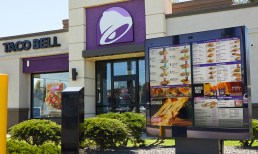
One worker takes orders from a line of cars, repeats them back over road noise and fields the complaints when a Crunchwrap comes out wrong. At more than 890 Taco Bell drive-thrus, voice artificial intelligence now takes the orders, and the chain’s parent company, Yum Brands, said the workers it has freed up are quitting less.
Yum Brands Chief Legal Officer and Corporate Secretary Erika Burkhardt said automated drive-thru ordering has been good for staff, Fortune reported Wednesday (Oct. 14).
“AI is actually increasing retention among our team members in the restaurant because it’s making their jobs easier,” Burkhardt said during the Fortune Most Powerful Women Summit, per the report. Automated ordering is “taking away the tension points of the ordering process,” freeing employees to focus on the food and the customer.
Omilia Says Its Voice AI Helps Taco Bell Keep Workers
Taco Bell has worked with Omilia, a conversational AI company that sells voice-ordering software to restaurants, since 2023, according to a July 7 press release.
The software takes the order at the speaker, handles changes and suggests add-ons, according to Omilia’s website.
That frees the crew to work the kitchen and the window, according to Omilia’s case study, which covered more than 890 Taco Bell stores in the United States as of April. Early indicators pointed to lower employee turnover at those stores than at stores without voice AI. Sales and transactions were on par or better.
At top-performing sites, the software handled more than 90% of orders without staff stepping in, Omilia said in a July 2025 blog post.
When Omilia announced in the July 7 press release that the system expanded to more than 890 Taco Bell restaurants in 38 states, it said locations using voice AI had higher retention than those without.
“Omilia’s platform has proven itself at scale in select U.S. restaurants, and continuing this strategic partnership supports our long-term digital and tech strategy,” Taco Bell Global Chief Digital and Technology Officer Dane Mathews said in the release.
Yum, Taco Bell and Omilia have not published turnover figures, and the claims are self-reported.
We’d love to be your preferred source for news.
Please add us to your preferred sources list so our news, data and interviews show up in your feed. Thanks!
Food Service Workers Quit Faster Than Any Other Industry
Keeping a crew together is harder in food service than anywhere else. Workers in accommodation and food services quit at a 3.5% rate in August, the highest of any industry and nearly twice the 1.9% rate across all nonfarm jobs, the Bureau of Labor Statistics reported Tuesday (Oct. 13).
Churn is the problem Omilia said voice AI solves.
The National Restaurant Association’s 2026 State of the Restaurant Industry report found in February that 80% of restaurants were short at least one position in 2025, and training one new employee cost an average of $3,037, PYMNTS reported May 26.
A drive-thru that keeps its crew avoids the hiring and training cost of each replacement, a return that does not show up in order times or ticket size.
Taco Bell Kept Expanding as McDonald’s Started Over
Taco Bell’s road to more than 890 drive-thrus has been bumpy. In August 2025, with voice AI in more than 500 locations, the chain said it was reconsidering which tasks the software could handle and which still needed people, after some customers complained about glitches, PYMNTS reported, citing The Wall Street Journal. Mathews said at the time that it was “really, really early.”
Instead of pulling back, Taco Bell kept expanding. Yum Brands said in July that it works with several technology providers, including Nvidia, Restaurant Dive reported.
McDonald’s is betting on voice AI, too. The burger giant, which ended a drive-thru voice test with IBM in 2024 after running it in more than 100 restaurants, said at its Sept. 23 investor day that it will roll out its own voice agent, Archy, across U.S. restaurants starting in 2027, PYMNTS reported Sept. 29. The company said Archy will free at least 50 labor hours per restaurant each week.
For all PYMNTS AI coverage, subscribe to the daily AI newsletter.



 Add as Preferred Source