Apple used WWDC 2026 to finally deliver the Siri overhaul it has been promising since 2024. The question underneath the announcement is whether a better Siri changes Apple’s position in the AI race, or whether it simply delays a more uncomfortable reckoning.
TechCrunch reported that the redesigned Siri, now powered by Google Gemini, launches as a standalone app capable of multistep tasks, contextual conversation, and cross-app actions. Apple Senior Vice President Craig Federighi said at the keynote that “privacy in AI is nonnegotiable,” framing the Gemini integration around on-device processing and third-party verification.
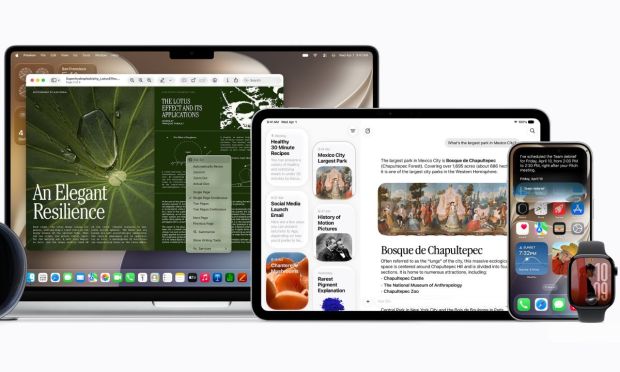
Apple Intelligence expanded across the full software stack in iOS27, reaching generative photo editing, smarter Home app notifications, AI-powered writing tools in Messages and Mail that adapt to a user’s writing style and natural language event creation in Calendar. Engadget noted that Apple Intelligence also extends accessibility features, giving VoiceOver richer image descriptions and letting users describe on-screen controls without memorizing specific labels. The redesigned Siri will not be available in the European Union at launch, consistent with Apple’s pattern of holding features back under Digital Markets Act pressure.
PYMNTS noted that the real competition in AI is not about which model is smartest. It is about who controls the device in the consumer’s hand. As PYMNTS CEO Karen Webster wrote, “the device determines the defaults, the defaults determine the distribution, the distribution determines the usage and the usage determines the revenue.”
The Gemini Gamble
Putting Google Gemini under Siri is the most structurally significant move at WWDC, and not primarily because of what it adds to the assistant. It signals that Apple could not close the capability gap on its own timeline and chose a partner over continued delays.
PYMNTS Intelligence data found that Android users are 24 percentage points more likely to use Google Gemini than iOS users — not because of preference but because Gemini ships as the default on every Android device, pre-signed into the same Google account that holds Gmail, Maps, Calendar, and Wallet. ChatGPT, meanwhile, is the preferred AI on iOS by 10 percentage points over Android users. Apple’s own AI tools were not the reason. iPhone users were reaching past Apple to get the experience they wanted.
We’d love to be your preferred source for news.
Please add us to your preferred sources list so our news, data and interviews show up in your feed. Thanks!
Tom’s Guide reported that iOS 27 will open Siri to third-party extensions from ChatGPT and Anthropic, giving users a choice of AI providers from within a single native interface. Apple is not trying to win the model race. It is trying to remain the device through which every model gets accessed.
That position has real economics behind it. PYMNTS noted that Apple’s App Store takes 30% of AI subscriptions in the first year, 15% thereafter, on revenue it generates without training, hosting, or supporting a model. Apple reported fiscal Q2 2026 services revenue of a record $31 billion, up 16% year over year, now exceeding Mac, iPad, and Wearables revenue combined.
The Agentic Gap
The Wallet updates are the closest WWDC came to an agentic commerce play. Visual Intelligence for bill splitting lets users point a camera at a receipt and generate payment requests across contacts. The “Create a Pass” feature digitizes physical tickets and membership cards into Wallet.
Engadget noted that Calendar can now add or modify events from a natural language description, and that search was rebuilt across iOS, iPadOS, and macOS to index new files almost immediately. These are incremental steps toward an assistant that manages logistics rather than just answers questions.
But they fall short of agentic in the way OpenAI or Amazon are building. PYMNTS Intelligence found that among power users, 55% want AI that comes to them rather than AI they go to. Among iPhone users specifically, that figure runs 7 percentage points higher than among Android users. iOS users are also 12 percentage points more likely to be active AI users than Android users. Apple has the most AI-engaged audience of any device manufacturer and the weakest native AI to serve it.
WWDC 2026 is Apple’s argument that it can hold the device layer long enough for the agentic economy to become something it taxes rather than something that routes around it.
For all PYMNTS AI coverage, subscribe to the daily AI Newsletter.


 Add as Preferred Source