Cryptocurrency’s biggest enterprise problem isn’t its volatility and unpredictable returns. It’s that the risk of digital assets, spanning both the balance sheet and the compliance and regulatory arena, is difficult to calculate.
Chief financial officers have historically been forced to answer, mostly by themselves, questions like what exactly was the asset? Was it itself a security, or was its sale part of an investment contract? Could that status change? What obligations traveled with it? How much regulatory risk needed to be layered on top of the market, custody, liquidity and operational risks a treasury department already had to consider?
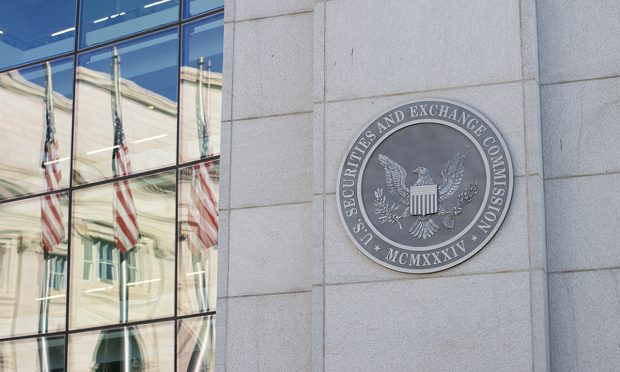
The Securities and Exchange Commission is now trying to make some of those questions easier to answer with its “Regulation Crypto Assets” initiative, updated Tuesday (Aug. 18).
“As we continue the commission’s efforts to provide clarity for crypto markets, and as Congress works to establish a lasting regulatory framework, Regulation Crypto Assets seeks to provide crypto asset entrepreneurs and market participants with clear pathways to raise capital under the federal securities laws,” SEC Chairman Paul S. Atkins said in a statement.
For corporate finance, the important development is that crypto’s regulatory risk is beginning to look less like an unknowable and more like something that can potentially be put into a spreadsheet.
See also: The GENIUS Act Gives Stablecoins a Corporate Cash Audition
The CFO’s Crypto Problem Is Changing From the Unknown to the Defined
Corporate finance departments are built to price risk. They routinely make decisions involving interest rates, currencies, counterparties, commodities and credit. What makes an emerging asset particularly difficult isn’t necessarily that it is risky. It’s that the boundaries of the risk are unclear.
The PYMNTS Intelligence and Citi report “Chain Reaction: Regulatory Clarity as the Catalyst for Blockchain Adoption” found in January that regulation will shape blockchain’s next leap. Regulation Crypto Assets takes a step toward that regulatory clarity by proposing actual pathways for certain digital asset offerings. The proposal includes two registration exemptions, one covering offerings of up to $5 million during a four-year period and another permitting offerings of up to $75 million in a 12-month period, along with disclosure requirements and a conditional safe harbor governing when a crypto asset would no longer be deemed subject to an investment contract.
Instead of asking first, “Can we touch this,” finance executives may increasingly be able to ask, “What would have to be true for touching this to make economic sense?”
We’d love to be your preferred source for news.
Please add us to your preferred sources list so our news, data and interviews show up in your feed. Thanks!
“Today, stablecoins are like a drug trying to treat 20 different problems,” Prajit Nanu, founder and CEO of real-time payments firm Nium, told PYMNTS in July.
“Where we see a significant amount of opportunity is stablecoin not as a payments value, but as a settlement value,” Nanu added. “Where we think stablecoin has the biggest value … is a treasury layer across all the entities, where I can move money instantly among my entities.”
Read also: Nobody Told the ERP That Blockchain Won
Regulatory Clarity Is Giving Enterprise Crypto an Economic Value
The interesting number isn’t how much corporate money could theoretically enter crypto. It is the price at which a CFO would actually move the first dollar. When an asset’s regulatory status is unclear, businesses compensate through additional legal work, compliance controls, risk limits or simply avoidance. Capital that might otherwise enter the market stays out because the range of potential outcomes is too wide.
The SEC said its proposal is designed to reduce barriers to domestic crypto capital formation while maintaining investor protections. It would also preempt certain state securities registration and qualification requirements for offerings conducted under the proposed exemptions and certain secondary-market transactions.
If clearer classifications, offering rules and safe harbors emerge and mainstream companies still decide that digital assets do not improve their cost of capital, liquidity management, settlement economics or returns, regulation may not have been the biggest obstacle. Crypto’s utility is.
The industry, and the rest of the corporate landscape, will gain new clarity as the rest of Washington catches up to the initiative of federal oversight agencies. The Senate’s next action on the CLARITY Act, for example, is set for Sept. 15 and will be a procedural vote that could signal whether the United States bill regulating crypto markets has a future.
At the same time, “Waiting for Certainty: Why Most CFOs Are Holding Back on Crypto and Stablecoins,” the March installment of PYMNTS Intelligence’s 2026 Certainty Project, showed that most middle-market companies remain cautious about digital assets. Usage is limited, with 13% of firms using stablecoins and 5% employing other cryptocurrencies.
For all PYMNTS B2B and digital transformation coverage, subscribe to the daily B2B and Digital Transformation Newsletters.


 Add as Preferred Source