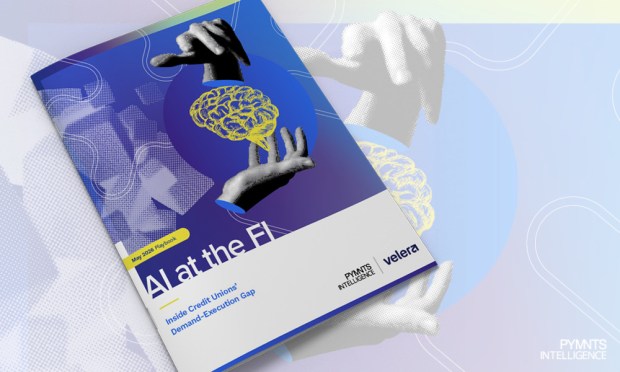
“AI at the FI: Inside Credit Unions’ Demand-Execution Gap” examines how consumers, small businesses, credit unions and FinTechs are approaching the next wave of AI-powered financial services. The report finds that demand is high, especially among customers and prospective members whom financial institutions most want to attract. Seventy-five percent of SMBs and 59% of consumers say they would use at least one AI assistant feature from their financial institution. Interest is especially strong among Gen Z, millennials, former CU members and SMBs with more than $1 million in annual revenue.
The challenge is that supply has not caught up with demand. Many credit unions see AI as a growth tool, but most are still early in offering the features members want. Only 25% of CUs currently offer AI chat support. Even fewer offer AI-powered financial advice or AI tools for payments and purchases. FinTechs are somewhat ahead in chat support, but they don’t have a major lead in the more advanced AI capabilities tied to advice, payments or purchases.
Members aren’t asking the technology to take over their financial lives. They want practical help first. Consumers are most interested in tools that track bills and subscriptions, offer savings and credit tips, help create budgets and compare financial products. SMBs show similar demand for AI that can track expenses, manage bills, compare financial products and provide cash flow guidance.
For credit unions, the findings point to an opportunity. AI can become a way to deepen relationships with current members, win back former members and compete for younger consumers and higher-value SMBs. But that will require CUs to connect the technology more directly to their innovation roadmaps, rather than treating it as a future feature to add after payments, security and data upgrades are complete.
We’d love to be your preferred source for news.
Please add us to your preferred sources list so our news, data and interviews show up in your feed. Thanks!
In “AI at the FI: Inside Credit Unions’ Demand-Execution Gap,” learn how:
- CUs can use AI as an acquisition tool for younger consumers, former members and growth-stage SMBs.
- Money management features can help financial institutions build trust before offering more autonomous AI capabilities.
- Smaller CUs could narrow the innovation gap by using partnerships and faster deployment models to bring AI tools to market.
Inside the Playbook
This report is based on four parallel surveys conducted for the Credit Union Innovation Readiness study, a PYMNTS Intelligence and Velera series. The consumer survey included 13,918 U.S. adults, fielded Oct. 31–Dec. 30, 2025.
The SMB survey included 2,474 U.S.-based SMBs and was fielded over the same period. Respondents were asked which AI assistant features they would likely use for their business in the next two years.
The credit union executive survey included 500 executives and was fielded Oct. 22–Nov. 21, 2025, and measured current and planned AI capabilities, acquisition strategies and innovation priorities.
The FinTech executive survey included 100 executives and was fielded across corresponding periods. This analysis focused on the most recent wave in November 2025.
See More In:
artificial intelligence, credit unions, featured insights, FinTechs, Main Feature, News, Payments Intelligence, PYMNTS Intelligence, PYMNTS News, PYMNTS Study, Velera


 Add as Preferred Source