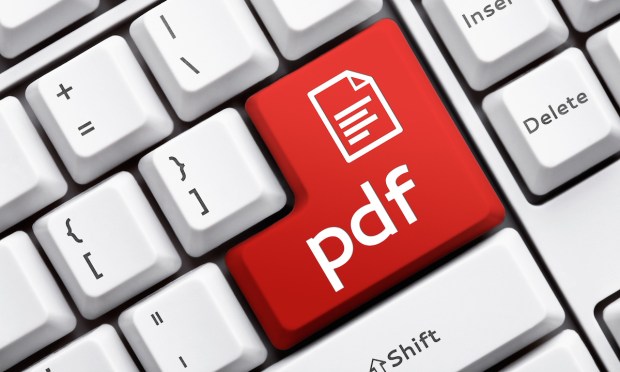
The paper check has spent years as the punchline of B2B payments modernization. The next legacy format is already sitting in the accounts payable inbox. It’s the PDF.
The PDF invoice is moving upstream into a data format problem as the B2B format becomes to AP teams what the paper check used to be. It’s something operationally familiar but entirely incompatible with 21st century automation and payments modernization.
PDF invoices have looked like digitization for almost 20 years now. They eliminated envelopes, postage and filing cabinets while allowing suppliers to email something that looked exactly like an invoice. But they digitized the delivery mechanism without necessarily digitizing the underlying transaction.
As finance teams push toward touchless AP, real-time reconciliation and artificial intelligence-driven payment decisions, that distinction is becoming expensive for chief financial officers.
Read also: The Fed Rate Hike Is Making Corporate Cash Too Expensive to Ignore
The PDF Digitized Paper, but It Didn’t Digitize the Invoice
PDFs were designed to preserve how information looks to a human. Modern AP infrastructure needs to know what that information means to a machine. Invoices are now expected to function as machine-readable financial data. A conventional PDF typically can’t do that without first being interpreted, extracted and reconstructed by another layer of technology.
In the time it took to read this, thousands of PDF invoices have entered a supposedly automated finance operation. But what happens next is distinctly un-automated. Software may still need to identify the supplier, extract the invoice number, recognize line items, find the purchase order reference, interpret tax information and determine payment terms before any downstream automation can begin. Optical character recognition made that process faster. Machine learning made it more accurate. Generative AI promises to make it smarter.
However, there is an awkward question underneath that progress. Why deploy sophisticated technology to reconstruct data that could have arrived as data in the first place?
See also: 24/7 Money Means Treasury Needs to Figure Out Its Weekend Plans
When the Invoice Becomes Data, Payments Change Too
We’d love to be your preferred source for news.
Please add us to your preferred sources list so our news, data and interviews show up in your feed. Thanks!
When invoice elements arrive as machine-readable data, the invoice itself can become an input directly into payment orchestration, with reconciliation happening as part of the transaction instead of after it. That is a fundamentally different automation model from teaching software to read a PDF faster.
None of this means the PDF is about to disappear from B2B commerce. Paper checks have demonstrated just how long familiar financial formats can survive after technically superior alternatives emerge. Supplier inertia, integration expense, ERP fragmentation and the enormous coordination problem inherent in B2B networks will keep PDFs circulating for years.
But AI is already changing what automation means. Instead of building ever-smarter systems to extract information from invoices and feed it into payment workflows, enterprises can make the invoice itself part of the workflow.
Still, the PYMNTS Intelligence report “Tech on Tech: How the Technology Sector Is Powering Agentic AI Adoption” found a widening agentic readiness gap between tech companies and firms in goods and services, with 75% of tech firms reporting they were extremely familiar with agentic AI, versus 33% of goods firms and 38% of services firms.
Read also: Instant Payments Unlock Working Capital by Allowing Treasury to Pay Later
Sometimes firms may not have much of a choice. France’s electronic invoicing framework, for example, began rolling out Sept. 1, requiring businesses to be capable of receiving electronic invoices, with issuance obligations phased according to company size. Germany is pursuing a similar transition. Under its rules, an ordinary PDF is not considered an eInvoice because the underlying information is not provided in the required structured electronic format.
For years, businesses could say they had “digitized” invoicing because invoices arrived by email rather than mail. European policymakers are now defining digitization according to whether software can automatically process the underlying information.
The paper check became legacy technology when the rest of payments infrastructure began demanding something faster, richer and more programmable.
The PDF invoice may now be approaching the same moment.
For all PYMNTS B2B coverage, subscribe to the daily B2B newsletter.


 Add as Preferred Source