Real-time payments in South America have moved well beyond proof of concept. They’re becoming the financial backbone of entire economies, and the numbers speak for themselves.
The evidence starts with Brazil’s Pix, which has become one of the most consequential instant payment platforms in the world. Launched in 2020, it now counts more than 150 million active users—roughly 70% of the country’s population. The platform processes more transactions than Visa and Mastercard combined. And its commercial pull is growing. Payments platform Boku went live with Pix in May, enabling account-to-account settlement for merchants in domestic and cross-border corridors. The central bank has extended Pix’s reach into Argentina, allowing the Brazilian diaspora there to send payments across the border.
Success at that scale invites scrutiny, and Washington has taken notice. The Trump administration has argued that Pix’s government backing creates an uneven competitive environment for U.S.-based networks, leading the Office of the U.S. Trade Representative to open a formal investigation. The Peterson Institute for International Economics characterizes the standoff as a broader contest between financial sovereignty and the interests of established global networks.
Pix’s explosive growth has brought complications that extend beyond the payments themselves. Cybercriminals are targeting a system where completed transfers are irreversible. Meanwhile, Brazil’s central bank is stretched thin, overseeing a financial ecosystem that’s expanded alongside Pix and the broader FinTech sector.
In Colombia, Bre-B instant payment system surpassed 500 million transactions and 100 million registered payment keys in just five months—an extraordinary early performance. In addition, ACI Worldwide projects that by 2028, real-time payments will contribute $19.3 billion in incremental GDP to Argentina, $376 million to Peru and $740 million to Chile. This growth will also draw millions of consumers into formal financial systems for the first time.
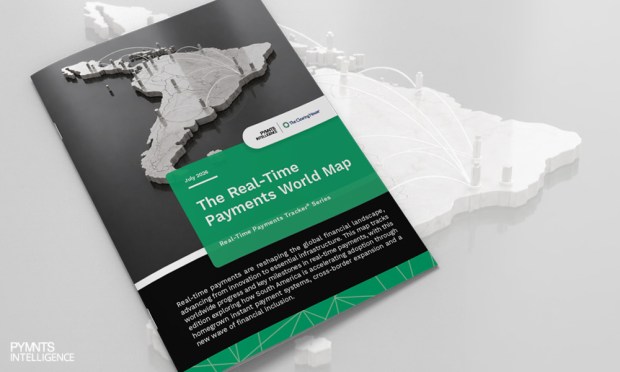
For more on these developments, download the July edition of the Real-Time Payments World Map.
We’d love to be your preferred source for news.
Please add us to your preferred sources list so our news, data and interviews show up in your feed. Thanks!
Download the Map
Real-Time Payments World Map – July 2026
About the Real-Time Payments World Map
“The Real-Time Payments World Map,” a collaboration with The Clearing House, explores the latest developments shaping the evolution and expansion of instant payments.
See More In:
featured insights, Featured News, financial inclusion, instant payments, investigations, News, Payments Intelligence, PYMNTS Intelligence, PYMNTS News, real time payments, The Clearing House, Tracker Series


 Add as Preferred Source