A full shopping cart looks promising until the shopper can’t find a way to pay. The merchant has done the hard work of winning their interest, only to lose the sale at checkout. Digital wallet payment preferences can play a major role in whether shoppers complete a purchase or abandon their carts.
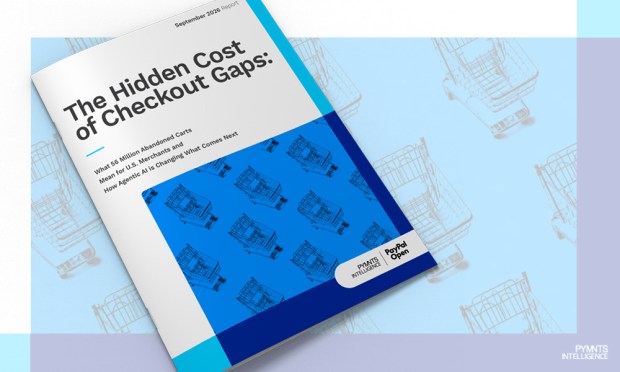
“The Hidden Cost of Checkout Gaps,” a PYMNTS Intelligence report produced in collaboration with PayPal, explores why shoppers leave purchases behind and how merchants can give them more reasons to stay. The findings draw on a June 2026 survey of 2,179 U.S. adults.
The report estimates that nearly 56 million U.S. consumers abandoned an online cart in the prior 30 days because their preferred payment method wasn’t available. Missing digital wallets accounted for about 26 million of those shoppers. Buy now, pay later options were another major source of lost purchases.
Those numbers put payment choice squarely on the merchant’s growth agenda. A shopper might like the product and accept the price. Their decision can still fall apart over how they’ll pay. Understanding those preferences can help merchants identify gaps in their checkout experience.
The next phase of shopping adds another reason to pay attention. Some 43% of consumers say they’d likely link a digital wallet to an AI agent for purchases within two years. Familiar payment tools could help them take that step. They also want a say in what an agent can buy and how much it can spend.
We’d love to be your preferred source for news.
Please add us to your preferred sources list so our news, data and interviews show up in your feed. Thanks!
In “The Hidden Costs of Checkout Gaps,” learn how:
- Household budgets influence checkout decisions. Among consumers living paycheck to paycheck who struggle with bills, 29% abandoned a cart over a missing payment method. The report explores how financial pressure connects to payment preferences and lost purchases.
- Wallet preferences can put the customer relationship at risk. One in four digital wallet users would leave a merchant entirely if their preferred wallet wasn’t accepted. Explore why payment choice deserves attention beyond a single transaction.
- Consumer controls can support the move to AI purchases. Shoppers want purchase approvals, spending limits and restrictions on what agents can buy. Discover the settings that could help consumers feel more comfortable handing over part of the shopping process.
Download the report to see where payment gaps put sales at risk and what shoppers want next.
About the Report
“The Hidden Cost of Checkout Gaps” is a PYMNTS Intelligence report sponsored by and produced in collaboration with PayPal. It draws on a survey of 2,179 U.S. adults conducted in June 2026. PYMNTS Intelligence retains full editorial control over the following findings, methodology and data analysis. Population-level figures are extrapolations from survey results applied to the U.S. adult population. Our sample was balanced to match the U.S. adult population by age, gender, education and income.
See More In:
artificial intelligence, buy now pay later, digital wallets, ecommerce, featured insights, Main Feature, News, online shopping, Payments Intelligence, PayPal, PYMNTS Intelligence, PYMNTS News, PYMNTS Study


 Add as Preferred Source