As restaurants and aggregators alike look to drive adoption, PYMNTS Intelligence suggests that card-linked offers can go a long way.
By the Numbers
The October report “Leveraging Item-Level Receipt Data: How Personalized Card-Linked Offers Drive Store Card Usage,” a PYMNTS Intelligence and Banyan collaboration, draws from a census-balanced survey of more than 2,000 U.S. consumers to learn about their interest in using card-linked rewards programs.
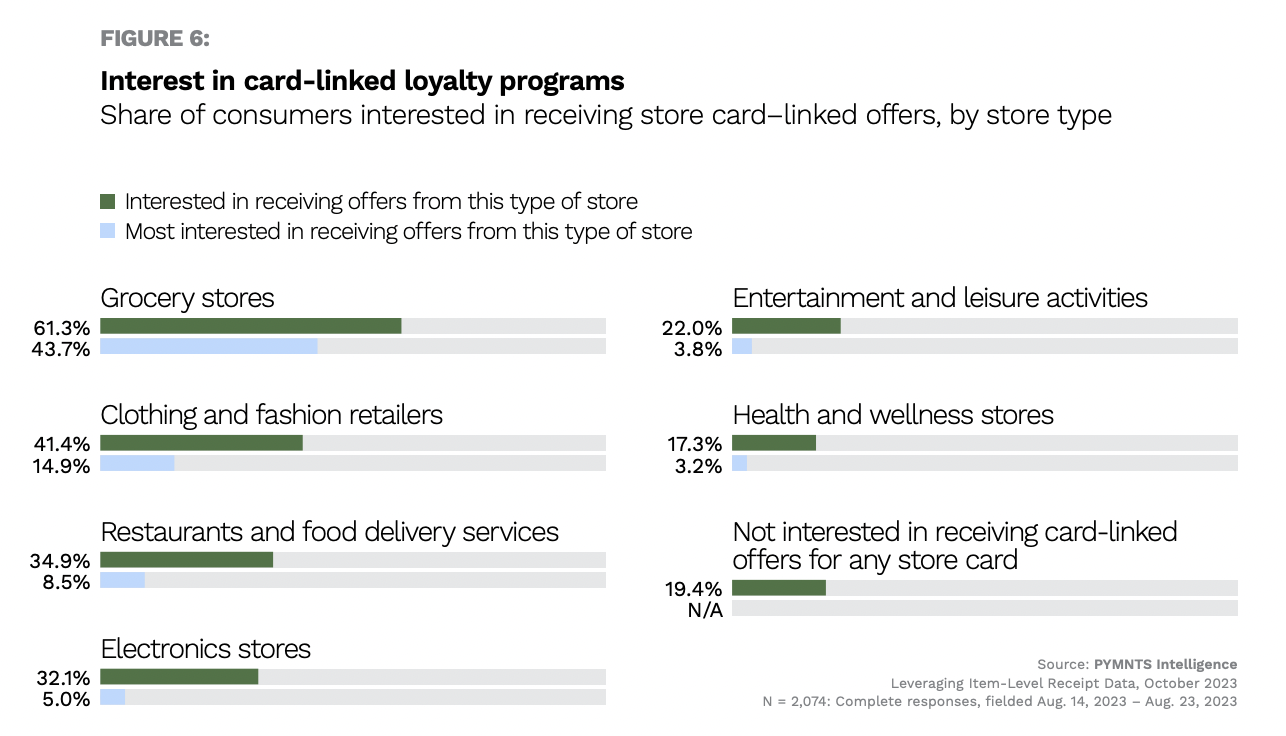
The results reveal that 35% of consumers are interested in receiving card-linked offers from restaurants and food delivery services. Plus, 9% cite this as the type of card-linked reward they are most interested in receiving.
In fact, the opportunity for restaurants goes even deeper than that, according to the September installment of the “Leveraging Item-Level Receipt Data” series, “How Card-Linked Offers Drive Customer Loyalty,” also done with Banyan and drawing from a July survey of more than 2,000 U.S. consumers.
The study found that 53% of those who are likely to use a product-specific card-linked offer program in the next three months — or 44% of consumers overall — are very or extremely likely to do so for restaurant purchases.
A Deeper Dive
These kinds of offerings can be key, as restaurants continue to see their customers’ dining decisions impacted by ongoing financial pressures.
Advertisement: Scroll to Continue
According to the PYMNTS Intelligence study “The Credit Economy: How Consumers Are Approaching Holiday Spending and Travel,” created in collaboration with i2c, which is based on responses from more than 3,300 U.S. consumers, 79% of participants say they plan to cut back on buying food from restaurants this season due to concerns about holiday spending.
Moreover, the report “New Reality Check: The Paycheck-to-Paycheck Report – The Saving Deep Dive Edition,” a PYMNTS Intelligence and LendingClub collaboration, finds that, on average across the more than 3,600 U.S. consumers surveyed, people have seen their savings decreased by 7.1% since 2021.