A $10 purchase that can wait until tomorrow is one kind of retail transaction. A $10 item that keeps a customer from finishing a repair, taking medicine or charging a device is another. Ultrafast delivery is giving retailers a way to find out what the difference is worth.
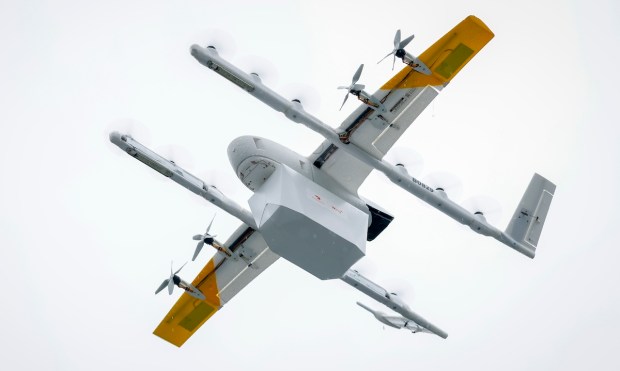
Lowe’s is working with DoorDash and Alphabet’s Wing on drone delivery in as little as 20 minutes in the Charlotte, North Carolina, area, PYMNTS reported Thursday (Sept. 24). Eligible customers order through the DoorDash app, with an initial assortment that includes hand tools, paint products and household items. Wing drones can carry approximately 2.5 pounds per flight.
Small, inexpensive purchases have traditionally been difficult delivery orders because picking and transportation costs consume a large share of the sale. Urgency can change the customer’s calculation.
A missing drill bit can stop a project. Pain relievers are needed for a raging fever. A charging cable before a trip has more value at 8 a.m. than it does the following afternoon. The merchandise may be inexpensive, but in such situations the cost of waiting is comparatively high.
Drone delivery is testing whether retailers can turn that difference into workable last-mile economics.
Walmart passed 1 million drone deliveries earlier this year, with 40% of its first million occurring during fiscal Q1 2027. Average delivery time was 23 minutes, while its fastest delivery took four minutes and 44 seconds.
Walmart also described a change in usage. Early orders were often driven by novelty, including products such as bananas and snacks. Customers subsequently began using drones more frequently when they needed something quickly.
As for DoorDash, more than 20% of orders on its platform in 2025 traveled between three and five miles, but those orders took nearly 25% longer than shorter deliveries, largely because matching them with a driver took longer, PYMNTS reported July 29. Drones delivered orders in an average of 25 minutes last year, while some locations participating in partner drone pilots experienced roughly 30% growth in order volume. The company received Federal Aviation Administration authorization in July to launch its own drone delivery operation.
Drones could remove some orders from a delivery network in which driver time, distance and matching make relatively small purchases expensive to fulfill.
We’d love to be your preferred source for news.
Please add us to your preferred sources list so our news, data and interviews show up in your feed. Thanks!
The Cost Test
Whether the arithmetic works will depend heavily on cost.
Barclays research from April put autonomous delivery costs at $5 to $7 per order in early adoption markets with higher labor costs, approximately $3 to $4 below conventional delivery. Barclays estimated that mature autonomous delivery could eventually cost about $1 per drop. Autonomous delivery accounted for less than 1% of global food delivery orders at the time, making the long-term estimate a projection rather than an established operating cost.
Cutting several dollars from fulfillment does more to improve the economics of delivering a $15 order than a $150 order.
Amazon said in August that it plans to expand Prime Air to customers in nearly 500 cities and towns in the United States by the end of 2026, roughly six times its earlier footprint. The company had already delivered hundreds of thousands of packages by drone during 2026. More than 60% of the products Amazon customers buy most frequently meet Prime Air’s size and 5-pound weight requirements.
When Delivery Replaces the Trip
An August PYMNTS examination of Amazon and Walmart’s drone expansion looked at suburbs, exurbs and smaller markets, where conventional delivery loses some of the density that makes a van route efficient. A drone does not require dozens of nearby deliveries on the same route.
Trip replacement may provide another measure of the economics. Medicine, groceries or a missing home improvement item can prompt a customer to drive to a store. A service capable of replacing that trip in 20 minutes is competing with the customer’s travel time as well as other delivery services.
Lowe’s provides a useful test because many eligible products can interrupt something already underway. The value of receiving a roll of tape or a small tool quickly cannot be inferred from the item’s selling price alone. Retailers now must determine how often those circumstances occur, what customers will pay when they do, and whether autonomous delivery can serve them cheaply enough to leave money on the order. The smallest basket can carry considerable value when the customer needs it now.


 Add as Preferred Source