The startup’s Series A round, announced Wednesday (Nov. 18) in a press release emailed to PYMNTS, is designed to help develop deployment readiness infrastructure in Brazil, Korea and India; expand the company’s capture hardware and enrichment engine; and boost Humyn Labs’ on-the-ground presence in San Francisco, London and Seoul.
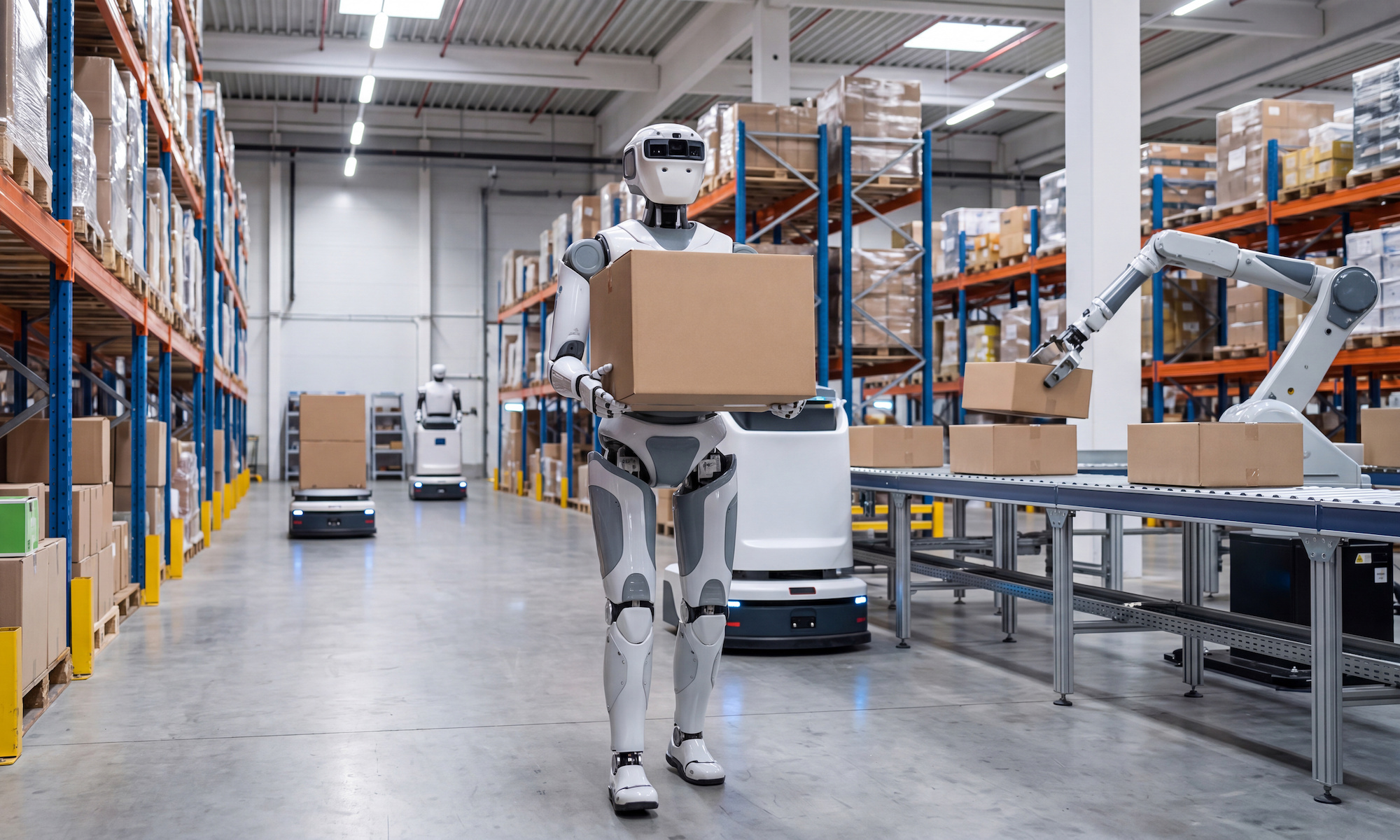
Founded this year, the company aims to “accelerate deployment readiness” for physical AI “by turning human experience into physical understanding for robots by capturing real-world work across factories, warehouses, farms and homes,” Humyn Labs said in a news release provided to PYMNTS.
The company’s capture devices record how humans perform specific jobs to the labs’ requirements, while its data engine converts these into “labelled, training-ready datasets with verified provenance across sight, sound, motion and touch,” the release added.
“A robot does not learn a job from the internet. It learns it from the person who has done it for twenty years, on the floor where it will be done,” Ishank Gupta, Humyn Labs’ co-founder, said in the release. “We bring the model lab and the site operator onto that floor together, so every deployment teaches the next model, and the world’s factories, farms and warehouses become the training set.”
Manish Agarwal, Humyn Labs’ co-founder, added that the company sees a “$10 billion opportunity emerging in data infrastructure” and aims to develop a $1 billion annual revenue business and “establish ourselves as a global leader in the space.”
Writing about the physical AI space in September, PYMNTS noted that while the boom around the technology is easy to envision as “a new factory filled with humanoid robots and autonomous machines, the bigger opportunity may be much less futuristic.” That opportunity involves making factories constructed decades ago smarter without having to replace the equipment within.
That market is taking shape as manufacturers add AI, sensors, digital twins and robots into their production systems. Recent deployments at PepsiCo and BMW, and funding rounds for startups such as Augury and Harmoni, indicate that physical AI can produce returns without manufacturers reconfiguring plants around automation.
“If plants can add capacity without new construction, that changes equipment financing, project lending and capex cycles,” the report said.