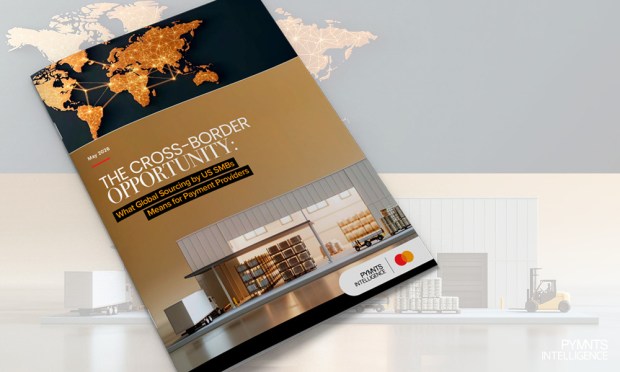
A collaboration between PYMNTS Intelligence and Mastercard, “The Cross-Border Opportunity: What Global Sourcing by US SMBs Means for Payment Providers” examines how U.S. small- to medium-sized businesses are becoming more global in the way they buy goods, materials and supplies. The report finds that 57% of U.S. SMBs now source from overseas suppliers, including many very small firms. This means companies of all sizes can participate in international buying, not just large companies with big procurement teams. SMBs across industries are building supplier relationships in markets such as Greater China, Canada, Mexico, the United Kingdom and the European Union.
The report also shows that payments have not fully caught up with this shift. Many SMBs still pay overseas suppliers in U.S. dollars, even when suppliers operate in other currencies. That can shift currency costs and uncertainty to the supplier. It can also create friction in relationships that SMBs depend on for inventory, pricing and growth. For payment providers, that gap creates a clear opportunity.
Banks remain the most widely used providers for cross-border payments, but FinTechs are gaining momentum. SMBs using FinTechs report high satisfaction, and their use is expected to grow faster than other provider categories. The reason is practical: SMBs want payment tools that are faster, easier to use and more transparent. They also want support for more currencies, clearer costs and better ways to track payments. The report makes clear that speed is the starting point, but not the full answer. Different SMBs need different capabilities depending on size, sourcing region and payment needs.
The larger message is that U.S. SMBs are already part of the global economy. Payment providers that help them pay suppliers faster, with fewer surprises and better control, can strengthen supplier relationships and win more SMB business.
We’d love to be your preferred source for news.
Please add us to your preferred sources list so our news, data and interviews show up in your feed. Thanks!
Download the Report
The Cross-Border Opportunity: What Global Sourcing by US SMBs Means for Payment Providers
In “The Cross-Border Opportunity: What Global Sourcing by US SMBs Means for Payment Providers,” learn how:
- SMB sourcing patterns differ by size and industry. Seven-figure firms lead in overseas sourcing, but even the smallest businesses are buying abroad.
- Supplier regions shape payment needs. SMBs buying from Asia Pacific, Europe, Mexico and Canada may face different currency, speed and support challenges.
- Banks and FinTechs can compete on more than price. Providers that combine fast settlement with transparency, local currency support and strong service are better positioned to grow.
About the Report
“The Cross-Border Opportunity: What Global Sourcing by US SMBs Means for Payment Providers” was produced in collaboration with Mastercard and independently designed, fielded, analyzed and written by PYMNTS Intelligence. Mastercard provided funding support but exercised no control over the methodology, data collection, findings or conclusions.
The report is based on a survey of owners, founders, vice presidents and executive directors of U.S. small businesses conducted February 12-24, 2026. Total sample: 535 firms with annual revenues up to $10 million. Of those, 310 sourced at least some production inputs internationally in 2025. All 2026 figures reflect stated intent, not confirmed adoption.
See More In:
B2B, B2B Payments, cross border trade, featured insights, Main Feature, Mastercard, News, Payments Intelligence, PYMNTS Intelligence, PYMNTS News, PYMNTS Study, SMBs


 Add as Preferred Source