Growth can create a strange problem. A company gets bigger, but the payment and credit tools around it don’t always keep up.
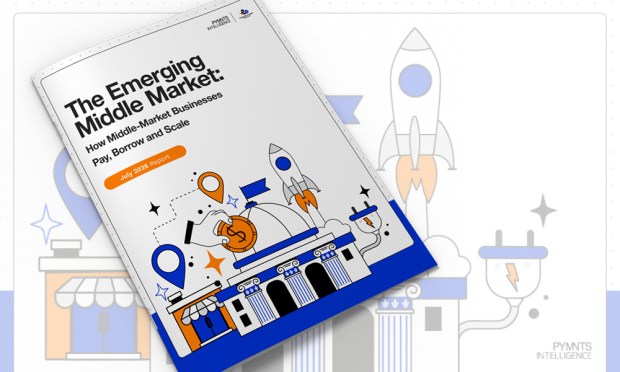
“The Emerging Middle Market: How Middle-Market Businesses Pay, Borrow and Scale” examines how five major industries manage payments, credit and cash flow as they expand. It draws on a February 2026 survey of 1,011 U.S. businesses with annual revenue between $1 million and $50 million. The study covers technology, financial services, goods and logistics, retail and hospitality, and professional services.
The findings show that middle-market businesses don’t face one common finance problem. Their needs vary with the way they earn revenue, pay suppliers, manage inventory and serve customers.
Technology firms use the most payment providers, with an average of 3.8. That complexity often leaves funds flowing on different schedules. Twenty-six percent of technology businesses run short of cash at least once a week.
Financial services firms face a different challenge. Many have access to credit, but they cannot reach it fast enough. Only 6% report no problems when applying for credit, and 30% use virtual cards mainly to gain faster access to funds.
Retail and hospitality firms keep their payment setups simple, but many rely on expensive merchant cash advances. Goods and logistics firms use fewer providers and miss fewer growth opportunities, yet their financing systems often remain separate from purchase orders, inventory and delivery data. Professional services firms use more traditional credit products, but slow approvals can delay their plans.
We’d love to be your preferred source for news.
Please add us to your preferred sources list so our news, data and interviews show up in your feed. Thanks!
In “The Emerging Middle Market: How Middle-Market Businesses Pay, Borrow and Scale,” learn how:
- Payment provider count connects to cash flow pressure across five industries.
- Credit speed can shape growth even when funding is already available.
- Financing choices change as businesses move from early growth to greater scale.
The report gives banks, lenders, FinTechs, payment providers and business leaders a clearer view of what growing companies need. It also shows where current products fall short and where better design can create stronger results.
Download the report to see how payment and credit systems can better support middle-market growth.
About the Report
“The Emerging Middle Market: How Middle-Market Businesses Pay, Borrow and Scale,” a collaboration between PYMNTS Intelligence and i2c, is based on a survey of owners, founders, vice presidents and executive directors from emerging middle-market businesses, conducted February 10-26, 2026.
PYMNTS defines the emerging middle market as companies generating $10 million to $50 million in annual revenue, plus high-growth businesses in the $1 million to $10 million range that are on a trajectory to surpass $50 million within the next five years. The sample comprises 1,011 U.S. businesses across five industry groups: technology, financial services, goods and logistics, retail and hospitality, and professional services.


 Add as Preferred Source