Real-time payments in Asia-Pacific are entering a new phase. After years of building domestic instant payment rails, countries across the region are now connecting those systems across borders, expanding their commercial uses and laying the groundwork for transactions that run without a person at each step.
The clearest example of that shift is Project Nexus. Backed by the Bank for International Settlements, the initiative is tying together the national instant payment systems of Malaysia, Singapore, Thailand, Indonesia and the Philippines through a common cross-border framework. Instead of negotiating separate bilateral connections with every partner, participants would connect once to reach the broader network, cutting the delays and costs associated with routing payments through correspondent banks.
India is taking a different path toward the same goal. Officials are reportedly in discussions with Ant International about linking Alipay+ with the Unified Payments Interface (UPI) for cross-border transactions. The link would connect one of the world’s largest instant payment systems with a platform spanning more than 100 markets and 1.8 billion accounts, letting Indian travelers pay with UPI at merchants connected to Alipay+.
China is moving toward commercial launch of mBridge, a digital currency platform that settles cross-border payments directly between the central banks of mainland China, Hong Kong, Thailand, the United Arab Emirates and Saudi Arabia. The platform could reduce reliance on the U.S. dollar, with fees running about half what conventional systems charge. So far, project leaders have not disclosed a launch date.
Domestic upgrades are advancing in parallel. Singapore is studying a second generation of PayNow, including a proposal to bridge PayNow and NETS QR so consumers can scan and pay across different schemes. A pilot is targeted for the end of 2026. Other proposals under consideration include a smoother online checkout and a wider set of business uses.
Thailand offers a preview of what’s coming. PromptPay was clearing more than 74 million transactions a day by mid-2025, with signups topping 81 million earlier that year. That depth of use is what makes the next step plausible: payments firing automatically once preset conditions are met, without manual approval. Eight firms have completed early trials of programmable baht payments, and the central bank will open public comment on stablecoin rules by year’s end.
We’d love to be your preferred source for news.
Please add us to your preferred sources list so our news, data and interviews show up in your feed. Thanks!
About the Real-Time Payments World Map
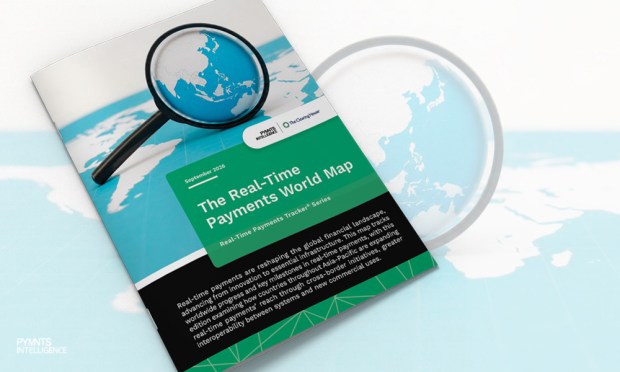
The September 2026 edition of the The Real-Time Payments World Map, a collaboration with The Clearing House, explores the latest developments shaping the evolution and expansion of instant payments in Asia-Pacific and around the world.


 Add as Preferred Source