Card issuers are under pressure to make their card programs do more than process transactions. Consumers expect cards to work instantly, safely and everywhere, whether the card is physical, virtual or loaded into a digital wallet. At the same time, issuers are trying to deepen customer relationships, increase usage, improve retention and turn card programs into a stronger source of long-term revenue.
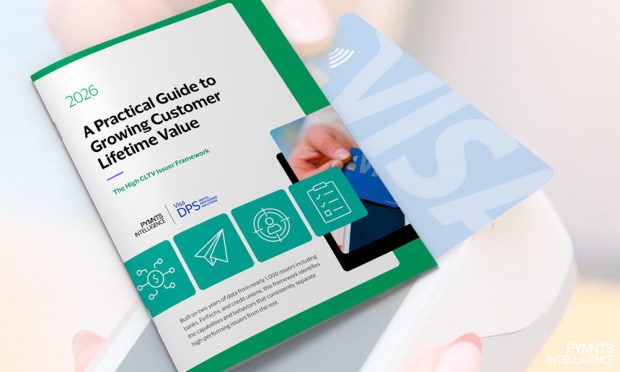
“A Practical Guide to Growing Customer Lifetime Value: The High CLTV Issuer Framework,” a PYMNTS Intelligence and Visa DPS collaboration, examines what separates issuers that are growing customer lifetime value from those that are falling behind. Based on two years of research covering nearly 1,000 U.S. card issuers, including banks, credit unions, FinTechs and digital-only banks, this report finds that the difference is not simply size, budget or access to new technology. The stronger performers are the issuers that know how to connect their capabilities into a clear growth strategy.
Operational basics still matter. Issuers need reliable processing, strong fraud controls, accurate account data and dependable card life cycle management. But those basics are no longer enough to stand out. High CLTV issuers build on that foundation with capabilities that create everyday value for customers, including instant digital issuance, wallet provisioning, personalized rewards, embedded financial products, AI-driven insights and stronger cross-sell strategies.
We identify four issuer profiles: Architects, Fast Trackers, Challengers and Box Checkers. Each profile has a different starting point and a different path forward. Some institutions already have scale and data advantages but need to translate them into higher profitability. Others have strong customer relationships but need to invest more deliberately in growth capabilities. FinTechs and digital-first issuers may excel at activation but need stronger monetization strategies to sustain long-term value.
We’d love to be your preferred source for news.
Please add us to your preferred sources list so our news, data and interviews show up in your feed. Thanks!
Download the Report
A Practical Guide to Growing Customer Lifetime Value: The High CLTV Issuer Framework
In “A Practical Guide to Growing Customer Lifetime Value: The High CLTV Issuer Framework,” learn how:
- Issuers can move from reliable card processing to a stronger growth strategy. Processing infrastructure should be treated as a customer relationship engine, not just a cost center.
- Different issuer types can prioritize their next move. Architects, Fast Trackers, Challengers and Box Checkers each face different risks, gaps and opportunities.
- AI, data and processor partnerships are changing the future of card issuing. Issuers that modernize now may be better positioned for agentic commerce and more personalized financial experiences.
We use average CLTV as an indicator of best-in-class issuing because it offers a comprehensive metric of the total revenue potential from a cardholder over the entire relationship. We separated issuers into groups—high ($2,500+), medium ($1,000 to less than $2,500), and low (less than $1,000)—based on their self-reported CLTV.
See More In:
banking, Banks, credit unions, featured insights, Featured News, FinTech, News, payments, Payments Intelligence, PYMNTS Intelligence, PYMNTS News, PYMNTS Study, Visa


 Add as Preferred Source