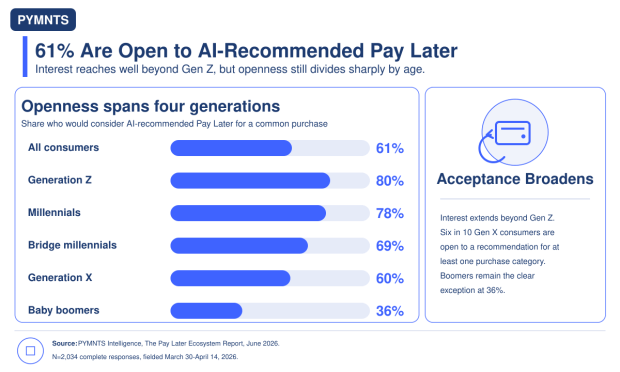
Artificial intelligence may win a place at the Pay Later checkout by recommending the financing, then letting the shopper make the final call. New PYMNTS Intelligence data shows 61% of U.S. consumers would consider an AI shopping assistant’s Pay Later recommendation for at least one common purchase category.
The June 2026 edition of The Pay Later Ecosystem Report, titled “Consumers Will Let AI Recommend Pay Later, But They Want Control,” draws on a survey of 2,034 U.S. adults. It found 39% of the surveyed consumers had used AI for a payment-related activity during the previous three months. Consumers also showed broader interest in using AI to compare Pay Later choices, provided the technology protects their credit, keeps costs down and asks permission before completing a purchase.
We’d love to be your preferred source for news.
Please add us to your preferred sources list so our news, data and interviews show up in your feed. Thanks!
Key Points:
- Interest extends beyond young adults. Gen Z leads, with 80% open to an AI-recommended Pay Later option in at least one category. Millennials follow at 78% and bridge millennials at 69%. The notable figure is Gen X: 60% are open to the idea. Baby boomers show less interest, with 36% expressing interest. That reach suggests providers can design for a wider market instead of treating the service as a youth feature.
- Electronics offers the clearest opening. Seventeen percent of consumers would let AI recommend a Pay Later option for electronics. Furniture, apparel, travel and everyday essentials each drew 13%. Home services or repairs followed at 12%, while medical or dental expenses and auto-related costs each reached 11%. Consumers appear willing to seek help with both planned purchases and bills that arrive unexpectedly.
- Control can turn interest into use. Among the conditions consumers selected, choosing the most affordable option and requiring approval before a plan is finalized tied for first at 24% each. Avoiding a new account or credit application and setting a maximum purchase amount followed at 21% each. Only 2% would let AI decide without limits. The preferred model looks like a knowledgeable store clerk who explains the choices, then waits for the customer to sign.
Other findings reinforce that practical approach. Fifty-nine percent rated protection from harm to their credit score as very or extremely important. Fifty-six percent prioritized the lowest total cost over time and 54% wanted the most affordable monthly payment. Approval before purchase was also the leading trust builder at 28%, followed by confirmation of total cost at 25%.
The report points toward an encouraging path for the Pay Later ecosystem: AI can make financing easier to compare while consumers retain authority over the final decision.


 Add as Preferred Source