Agentic commerce is about to answer a question direct selling has been circling for ninety years. Can a paid recommendation survive a suspicious customer? The most famous direct seller in history already told us no.
The interesting question about agents and commerce isn’t whether they’ll sell us things. They will. It’s what kind of seller they will turn out to be, because we have a century of sellers to compare them to, and the comparison could break in a direction almost nobody is talking about.
The agent isn’t the next influencer. On the part of selling that actually scales, the agent is the influencer’s opposite. It’s the anti-influencer. And whether the agentic commerce everyone is racing to build holds together or loses the user’s trust comes down to which of those two things the AI agent decides to be.
Splitting the Sale in Two
Let’s examine what a seller actually does, because agents are about to split those functions in two. And I’d like to start with the original sales model, the direct seller. Or in today’s vocabulary, the influencer.
A direct seller did two jobs at once, and we never had to separate them because they lived in the same person. The first is discovery and persuasion. “Let me tell you about something you didn’t know you wanted.” The second is transaction and trust. “Buy it through me, I’ll handle it.” Eons ago, in the physical world, the Avon lady did both across a kitchen table. The social media influencer does both inside a feed, the affiliate link standing in for the order form. The ad-supported platform does it too.
Agents pull the two functions apart. And once they’re apart they have completely different futures.
On the transaction side, the agent is the most complete direct seller ever built. It reaches everyone, it never sleeps, it closes without friction and it can be paid. Whoever compensates the agent, whether it’s the merchant through a take rate or the platform through placement, is writing the same check Avon wrote its reps. The commission framework is the same. Top-of-wallet becomes top-of-agent. This part of the model doesn’t go away. It gets sharper.
The discovery side of the model is where the agent-as-influencer comparison could fall apart.
Read More: The Pink Skirt Problem: Why AI Agents Can’t Own Serendipity
What the Influencer Actually Is
What’s old is new again. The influencer economy is direct selling rebuilt on platforms. LTK, ShopMy, the TikTok promo code. Same commission, new channel. But there’s one difference that turns out to be everything. The influencer still pitches the product. The entire model is touting your own wares. The influencer says “trust me.”
The influencer is only the visible tip of it. Underneath sits the online ad economy, the same arrangement at industrial scale, where the search result, the social feed and the retail shelf all run on seller money and the bias is buried so deep under the surface that consumers stopped registering it as bias at all.
Read More: Influencers May Not Be So Influential in Driving Purchases
Google’s own founders saw it coming. In their 1998 paper, Brin and Page warned that an ad-funded search engine would skew toward the advertisers and away from the people searching, then built the most valuable version of exactly that. The ad economy is the influencer’s pitch dressed up as a search result.
An agent that works for you says the opposite. The instant it takes a commission to surface one product over a better-fitting one, it stops being your agent and becomes the brand’s.
That conflict is the thing direct selling never had to resolve, because in direct selling the conflict was visible. You knew the Avon lady worked for Avon. You know the influencer is paid, even when the tag is buried, because there’s a face attached and a discount code in the caption. The bias is visible. Consumers can choose to ignore it.
Read More: 95% of Shoppers Research Influencer Picks Before Buying
An agent’s commission is invisible. There’s no face, no caption, no hashtag you learn to read past. That invisibility is either the model’s salvation, frictionless monetization the user never has to think about, or its poison, a ranking the user stops trusting the moment they suspect it was bought.
Which one it becomes isn’t a technology question. It’s a trust question. It’s a business model question. And it’s exactly the question the most successful direct seller in American history answered with her own career.
The Woman Who Quit Selling
I’ve been reading about Mary Kay Ash. The one thing that I didn’t know is something her legend leaves out. The most famous direct seller in America built the business that bears her name by not selling.
Mary Kathlyn Wagner started her direct selling journey on a dare in the late 1930s, when a door-to-door encyclopedia saleswoman bet her a free set she couldn’t sell ten. She did. She spent the next twenty-five years selling for other people, Stanley Home Products at parties hosted by the housewife next door, then World Gifts, where she built distribution across forty states and earned a board seat and then lost the promotion to a man she’d trained. In 1963 she put $5,000 into the company that took her name and turned it into more than a billion dollars in sales and a force of 800,000 women.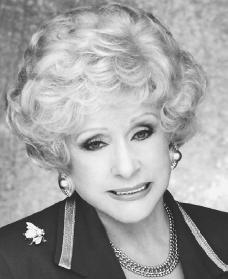
Along the way she stopped selling personally. She quit because she understood something her own diamonds, mink coats and pink-Cadillac mythology obscures. Customers got suspicious when she touted her own wares. So she stopped touting. She built a method for her consultants that removed the pitch entirely. Don’t persuade, she told them.
Show a woman how to use the product, let her look in the mirror, and let the result close the sale. Once women saw what it did, the products would sell themselves.
She wasn’t selling belief in Mary Kay. She was selling the evidence in the mirror. Where the influencer says “trust me,” Mary Kay built a system that said “don’t trust me, trust what you see.” She removed herself from the transaction so the evidence could carry it.
That model isn’t the original influencer, however tempting the line is. That’s the original anti-influencer, and she built the most durable direct-selling company on earth by being one.
So the question on the table isn’t whether agents are the ultimate direct seller. They are, on the transaction half. The question is which seller they imitate on the discovery half. The influencer who says “trust me” and is now watching disclosure fatigue chip away at the trust the whole thing runs on. Or Mary Kay, who said “trust the evidence” and outlasted everyone.
Consumers Asked for the Anti-Influencer Before It Existed
None of this is hypothetical. Consumers described the anti-influencer to us three years ago, when the technology to build it was still a commercial newborn.
Read More: How Consumers Want to Live in the Voice Economy
In March 2023, PYMNTS Intelligence put a series of use cases in front of 2,939 U.S. consumers and asked them to describe the ideal virtual personal assistant, and whether they’d pay for one that met the description. ChatGPT was a few months old. The voice assistants on the counter could set a timer and not much else. Barely one in ten consumers thought the voice tech they had then was smart enough to be reliable for anything that mattered.
What they wanted instead was an assistant that could untangle the cascading problems where one disruption topples a whole row of dominoes. The cancelled flight that takes the hotel, the car, the dinner and the next morning’s meeting with it. And in a close second, they wanted help finding things to buy in a way that surfaced the right thing, the one that fit what they actually needed rather than the thing an advertiser paid to put in front of them.
Read More: What Happens to Stores When AI Agents Do the Shopping?
That second answer is the anti-influencer, specified by the buyer a year before any product delivered it. Consumers weren’t asking for better ads. They were asking for something novel, the absence of ads in the moment they decide what to buy.
The research surfaced a number that stayed with me. Twenty-eight percent said they’d pay a monthly fee for that assistant, and 22% said they’d pay a reasonable price of over $10 a month. When you ask people to pay for software they’ve been trained to expect for free, and more than one in four say yes to a capability that barely existed, that’s a market raising its hand before the product has even been proven to work at scale. A consumer who felt the friction and was willing to pay for the remedy.
Unsurprisingly, consumers thought the incumbents would build it. They said they would trust a voice assistant made by Google at 46%, Apple at 41%, Amazon at 35%. But OpenAI, months old against rivals with a decade in market, drew 9% of this theoretical trust, and 7% named a provider that didn’t exist yet.
A real slice of the market was already betting past the ad-funded incumbents on something that hadn’t been built. They were willing to pay for trust, not capability, an assistant whose recommendations they could believe precisely because no advertiser funded them.
We’d love to be your preferred source for news.
Please add us to your preferred sources list so our news, data and interviews show up in your feed. Thanks!
They could name that thing before anyone delivered it. And said that it probably wouldn’t take even five years to get one.
The Data Already Picked a Side
The latest PYMNTS Intelligence consumer AI study shows the base case for agentic selling forming exactly where a commission model would want it. The heaviest users are pulling away on product discovery, climbing toward the high eighties (86%) on using GenAI to decide what to buy while the lightest users sit flat near twenty. That gap has widened all year. These are the same users deepening fastest on the decisions that matter, the ones who call the tool essential.
But look one level down, inside the discovery bucket, and the users have already told you which seller they want. The dominant AI activity isn’t “tell me what to buy.” It’s “research and compare.” People are deputizing the agent to evaluate, not to recommend on a brand’s behalf. It’s the customer reaching for the proverbial mirror to see how it looks.
The function that’s getting traction is the one Mary Kay built her company on. Evidence over persuasion, the result that sells itself. The function under strain is the one she walked away from, the paid voice telling you to trust it. The 2023 consumers asked for the anti-influencer, and today’s power users are building their habits around it.
The market is voting for the anti-influencer before the agent has even decided what it wants to be.
What’s Next
Of course, the influencer economy doesn’t disappear in the agentic era and it doesn’t cleanly reincarnate. It bifurcates. The transaction half fits. Agents will complete a transaction and agents will be paid.
The discovery half is the contested ground, and the contest will be worth watching.
Build the agent as an influencer, a paid voice optimizing for the brand behind an interface the user can’t see into, and you inherit the disclosure problem at machine scale that consumers can either ignore or disregard.
You also rebuild the exact thing the 2023 consumers said they’d pay to escape.
Read More: Why AI Shopping Is Still Just a Smarter Search Bar
Build it as the anti-influencer, an agent that surfaces the evidence and lets the result close, and you get the one thing the influencer economy is losing and Mary Kay never spent. Trust.
The agentic question is whether consumers will trust a channel whose bias they can’t see. Mary Kay Ash answered the human version of that question by removing herself from the sale.
Consumers answered it again in 2023, and they even said with their own money, before the virtual personal assistant they really wanted existed. The agents that win discovery will likely be the ones built to do the same thing. And the ones that lose it will be the ones that couldn’t resist keeping the pitch.
Trust the mirror, not the seller. Mary Kay knew it in 1963. Consumers said it again in 2023. The agents are about to find out whether it still holds when the seller is a machine.
Until NEXT time.
Join the 21,000 subscribers who’ve already said yes to what’s NEXT.



 Add as Preferred Source