The early bird used to get a supplier discount. These days, it may still be waiting for the customer to pay. Across North America, more businesses are receiving payments on the due date and rethinking when they can afford to pay their own bills.
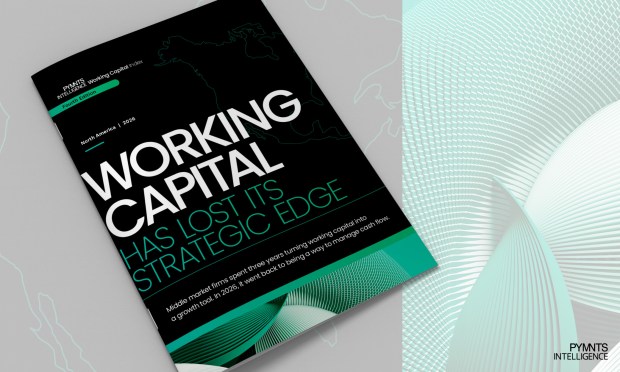
PYMNTS Intelligence produced The Working Capital Index, Fourth Edition, “Working Capital Has Lost Its Strategic Edge,” and retained full editorial control over its findings. The Index draws on a July 2026 survey of 120 CFOs and treasurers at U.S. and Canadian firms with annual revenue of $50 million to $1 billion. It compares their answers with three prior editions from 2025, 2024 and 2023.
We’d love to be your preferred source for news.
Please add us to your preferred sources list so our news, data and interviews show up in your feed. Thanks!
In “Working Capital Has Lost Its Strategic Edge,” learn how:
- Supplier discounts can still bring payments forward. Four in five firms say an offer of a discount or other incentive would persuade them to change their usual payment terms.
- Firms are choosing credit they can draw on when needed. Among businesses using working capital financing, 69% used bank lines of credit, up from 57% in 2025. Corporate and virtual card use also rose.
- Banks are hearing a different request. CFOs and treasurers most often asked for a stronger advisory relationship, followed by more flexibility to manage cash flow.
The Working Capital Index fell 6% to 51.6 in 2026, its first decline in four editions. The shift started with incoming payments. Firms received just 12% of customer payments early, down from 35% a year earlier. As that cash arrived later, firms paid fewer suppliers ahead of schedule. Early payments fell to 17% of their bills from 37%.
That change affects more than a date on an invoice. Paying early can earn a discount and strengthen a supplier relationship. Losing that option can leave a finance team with less room to act when expenses come due. More firms are using credit, and managing cash flow or covering emergencies now outranks growth as their main reason for borrowing.
Some firms have kept an edge. The report examines how they anticipate cash needs, use forecasts and decide when to act. It also shows what banks can do to help customers who want more than another financing product.
Download the report to see what changed, where the pressure is greatest and how leading firms are staying ready for what comes next.
About the Index
The PYMNTS Intelligence Working Capital Index, Fourth Edition, “Working Capital Has Lost Its Strategic Edge,” is based on a survey of 120 CFOs and Treasurers at firms generating between $50 million and $1 billion in annual revenue in the United States and Canada, fielded July 10–27, 2026. It is compared throughout with three prior editions on the same base definition: for the 2025 edition, 322 North American firms were surveyed from May 23–July 16, 2025; for the 2024 edition, 276 firms, surveyed from May 21–July 9, 2024; and for the 2023 edition, 244 firms, surveyed from May 21–July 9, 2023.


 Add as Preferred Source