Big Tech’s social and commerce platforms already dominate the web. Now, they want to help run Main Street.
Meta made that ambition explicit Monday (Sept. 28), announcing its new Meta Enterprise Platform and recruiting MongoDB CEO Chirantan “CJ” Desai to lead the initiative. A day later, Meta expanded its AI agent with small business-focused integrations across the applications merchants already use to manage their operations. Intuit, for example, said Tuesday (Sept. 29) its small business-focused financial intelligence services were now part of Meta’s new AI assistant.
For Main Street small business owners, these same tech platforms helped them grow their customer breadth and depth with advertising, search and digital storefronts that let small businesses reach a bigger shopper audience. Now, the frontier in small business technology is moving to the operating decisions that determine how merchants generate revenue, manage expenses and serve customers.
For years, Big Tech sold Main Street the promise of more customers. Today, it wants a hand in running the business once those customers arrive.
And the implications extend beyond Meta alone. As Google, Microsoft, OpenAI and other technology providers develop capable agentic AI assistants, the fragmented small business software market is becoming a testing ground for a different commercial proposition around agentic capabilities.
Read more: Tech Giants Just Made Every Business Their Business
Big Tech’s Small Business Goals Evolve Beyond Customer Acquisition
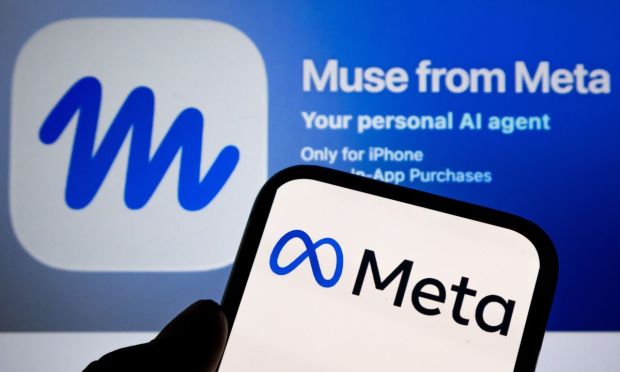
Meta’s enterprise expansion builds on an advantage most software companies would struggle to easily replicate: an established relationship with the businesses already using Facebook, Instagram and WhatsApp to attract, communicate with and sell to customers. Its new enterprise division will bring together products including Muse, Meta Business Agent, Muse API and Muse Code, extending its AI capabilities into products businesses and developers can deploy themselves.
The PYMNTS Intelligence Tracker “Who Decides Now: How Developers and Tech Teams Are Reshaping the Future of AP Payments” found in July that 58% of small to medium-sized businesses (SMBs) rank integration as very or extremely important when evaluating technology solutions.
The one-time social media giant has already announced integrations with Shopify, QuickBooks, and other platforms. By connecting these services with a merchant’s Meta business accounts, Muse can draw on information about marketing performance, financial activity, customer interactions and business operations.
The PYMNTS Intelligence report “Global Digital Shopping Index: The Agentic Commerce Deep Dive” found that 56% of consumers will let an agent search and compare products on their behalf, and 35% will grant an agent access to their saved payment credentials.
“We don’t see [agentic] so much as a new channel, as much as a new interface for interacting and engaging with commerce,” Sabrina Tharani, senior vice president, Global Fintech Programs at Mastercard, told PYMNTS this month.
We’d love to be your preferred source for news.
Please add us to your preferred sources list so our news, data and interviews show up in your feed. Thanks!
“It’s not just about the agent itself. It’s about the infrastructure that underpins what these economies are going to look like,” Tharani added.
Still, at the same time, the PYMNTS Intelligence report “Tech on Tech: How the Technology Sector Is Powering Agentic AI Adoption” found a widening agentic readiness gap between tech companies and firms in goods and services, with 75% of tech firms reporting they were extremely familiar with agentic AI, versus 33% of goods firms and 38% of services firms.
Read also: CFOs Turn to AI Harnesses as Agentic Capabilities Scale
The Small Business Software Stack Gets a New AI Boss
For Big Tech, the opportunity is larger than another subscription product. The company that helps a merchant acquire customers already has a valuable position in its commercial ecosystem. The company that helps decide how to serve those customers, manage the resulting transactions and reinvest the revenue could become considerably harder to replace. And if AI becomes the interface through which merchants manage their operations, payments may increasingly become an execution capability embedded within a broader business workflow.
Still, writing about Muse’s launch last week, PYMNTS examined the challenges facing Meta. The technology’s compute bill per session is higher than a chatbot, and Meta Chief AI Officer Alexandr Wang has said most users should never need to exit the free tier.
That leaves a $100 paid tier and merchant commissions to “carry a product whose costs rise with every download the charts are celebrating,” that report said.
“Downloads bought Meta a headline. Retention, merchants and margins will decide whether Muse is a business.”
After all, the largest obstacle to the vision of an AI-managed small business may not be technological capability. It may be trust. There is a meaningful difference between allowing an AI assistant to summarize monthly sales and authorizing it to negotiate with suppliers, change product pricing or communicate directly with customers.
Merchants will need clarity about data portability, access rights, transaction authorization and whether they can change AI providers without disrupting the applications and workflows supporting their businesses.
For all PYMNTS digital transformation and B2B coverage, subscribe to the daily digital transformation and B2B newsletters.


 Add as Preferred Source